
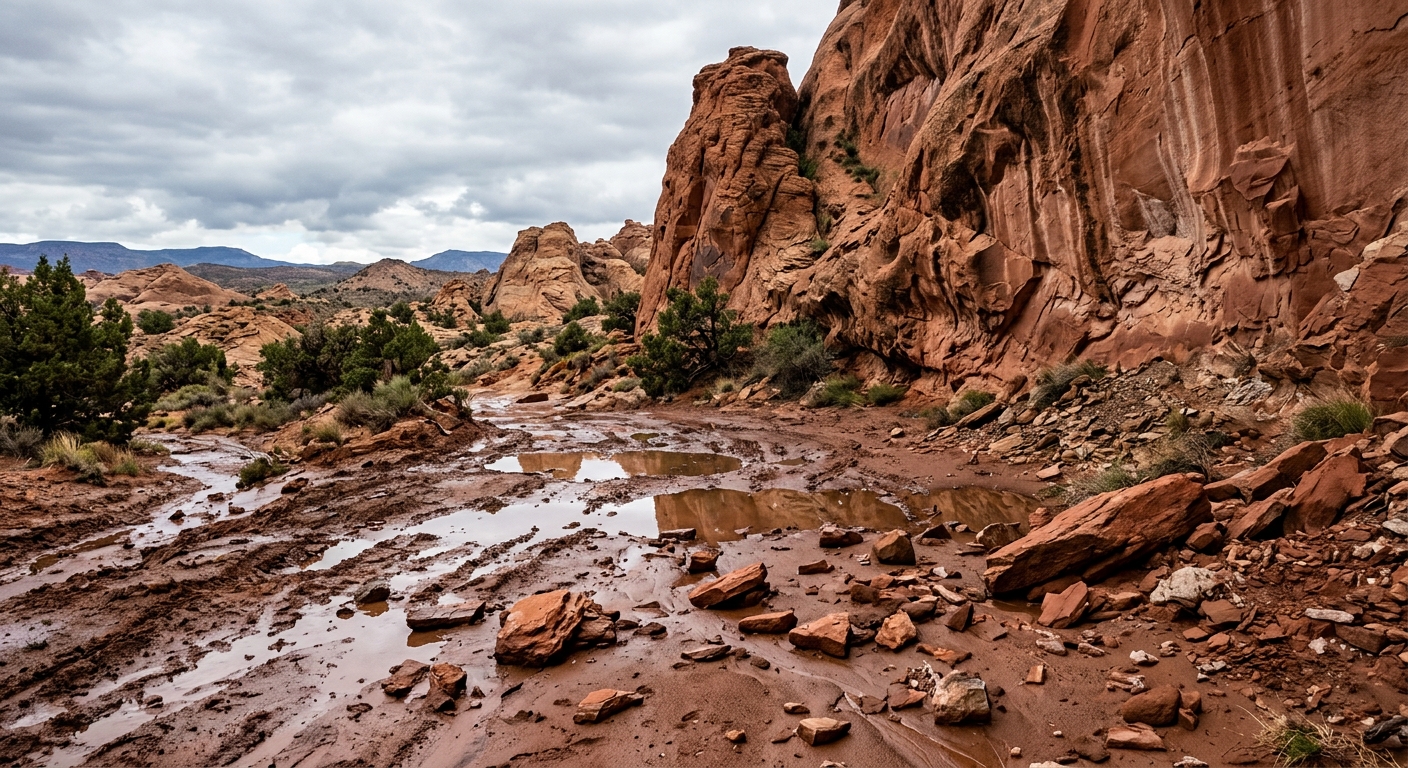
AI-generated illustration; not a photograph of the reported event.
- calendar_today November 6, 2026
Desert Formations Topple in Northwestern New Mexico
The high desert landscapes of northwestern New Mexico are renowned for their otherworldly rock formations, striking in their delicate balance and dramatic shapes formed by centuries of natural erosion. Recently, severe weather has taken a dramatic toll on these iconic landmarks. Two of the area's most well-known desert rock formations, the Alien Throne (Tsé Bináká Níyol) and King of Wings, have collapsed within weeks of each other, victims of the same forces that created them.
Persistent Storms and Widespread Flooding Across the Southwest
The southwestern US, including New Mexico, Colorado, Utah, and Arizona, has experienced a series of intense storms over recent weeks. Heavy rainfall fell on already saturated ground, resulting in destructive flooding. Rivers crested, floodwaters carved new channels through typically dry washes, and homes were destroyed. Officials estimate that damages from these events could total into the hundreds of millions of dollars as cleanup efforts are now underway.
Cultural and Environmental Loss: Alien Throne and King of Wings
Kialo Winters, founder of Navajo Tours USA, regularly guides visitors through the Ah-Shi-Sle-Pah Wilderness, showcasing these remarkable formations. On a recent visit, Winters discovered the Alien Throne in ruins. Previously, social media reports had circulated the loss of the King of Wings, as visitors documented its collapse in early October. While the exact timing of the Alien Throne's fall is unclear—road conditions prevented Winters' return for several weeks—he found it destroyed by the end of October.
Community Reactions and Cultural Significance
The collapse of these formations resonated strongly both locally and among visitors. Social media users expressed a mix of gratitude for witnessing these sites and regret from those who missed the chance. Some lamented the loss; others discussed the inevitability of natural forces. For Native Americans from the region, these rock formations are more than geological wonders—they are cultural landmarks, waypoints for ancestral trade routes, and central to generations-old stories. Winters noted their deeper meaning and urged visitors to respect what remains and not disturb the sites further.
Heavy Rains and the Four Corners States
More than 20 trillion gallons of rain fell across the Four Corners states and Nevada during late October and early November, as tropical moisture was funneled into the region. The storms impacted the Navajo Nation as well, where washed-out roads left many remote communities isolated. Evidence of erosion was visible even before the collapse; veteran visitors like Alan Studt from Ohio noticed new cracks and holes during recent trips, suggesting the structures' fragility.
Legacy Through Stories and Images
While natural erosion and flooding have claimed these distinctive formations, their stories continue through photographs, artwork, and personal memories. For those who have visited, the experience of exploring the unique hills, petrified wood, and vibrant soils of the region remains transformative—underscoring both the beauty and vulnerability of these southwestern desert icons.
Source: abcnews.com.