
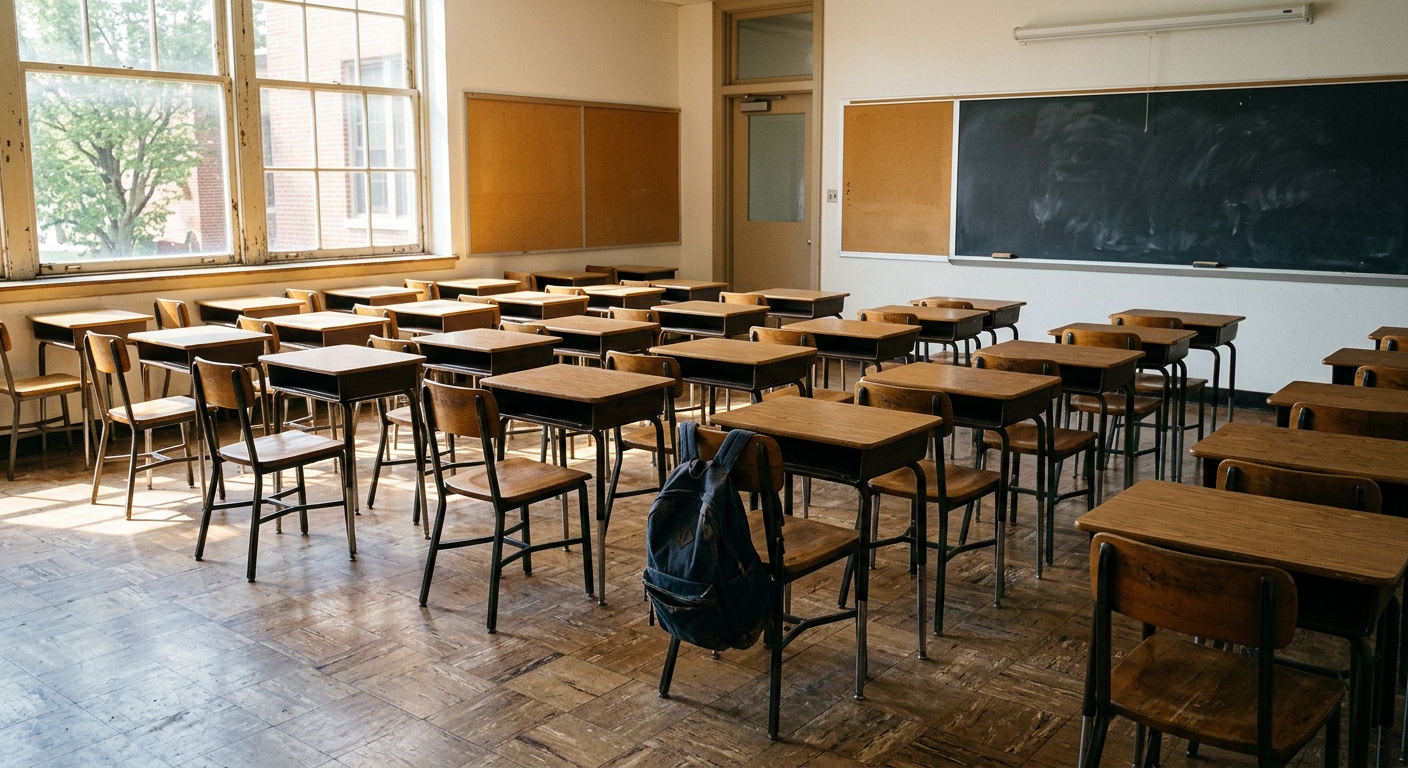
AI-generated illustration; not a photograph of the reported event.
- calendar_today November 6, 2026
Nationwide Public School Enrollment Declines Accelerate
Public schools across the United States are experiencing unprecedented drops in student populations, fueled by a combination of long-term declines in birth rates and intensified federal immigration enforcement. The consequences are hitting districts, families, and communities, leading to difficult decisions about school closures and consolidations.
Combination of Low Birth Rates and ICE Deportations
Kelly Gonez, a school board member in the Los Angeles Unified School District (LAUSD), said, “Birth rates here in Los Angeles County have been declining for decades, which means fewer children enrolled in our schools.” LAUSD, the nation’s second largest school district, has lost more than 300,000 students over two decades.
This longstanding demographic trend took a sharper turn after the Trump administration escalated immigration enforcement in 2025, deporting large numbers of immigrant residents, many with school-aged children. Gonez noted that following intensified ICE raids, the district saw enrollment declines double from their original 2% projection.
Demographic Shifts Across the United States
The decline is not unique to Los Angeles. U.S. Census data shows the population of children under 18 began falling after 2010, with around 2.1 million fewer children through 2025. The U.S. Department of Education reports that national public school enrollment peaked in 2019, dropping by approximately 1.5 million students by the 2024 school year. Projections suggest another 2 million student drop by 2030, a 7% national decline in about a decade.
Research from a June 2026 Bellwether and WestEd report warned that enrollment declines are now “sustained,” reshaping districts in 40 states. The report highlights “a sustained drop in birth rates,” aggravated by a “national slowdown in immigration,” as the primary drivers.
Regional Impacts and Community Stories
In states like Texas and Florida, districts with large immigrant populations have experienced sharp enrollment losses. Texas saw a drop of over 76,000 students last year, particularly among Hispanic and immigrant families. Florida’s Miami-Dade and Broward County districts lost about 30,000 students combined in one year, a trend linked to changes in temporary protected status and aggressive enforcement actions.
Teachers and parents report direct impacts at the local level. Guadalupe Cardona, a teacher at Santee Education Complex in Los Angeles, recounted that over 200 students disappeared from her roster after 2025 ICE raids. Parental fear and absence of students have also affected community businesses and employment in affected neighborhoods.
Some U.S.-born students are also leaving as their families face deportation. Vanessa Salazar, a former senior in LAUSD, dropped out after her mother was deported to Mexico, eventually moving abroad herself.
Policy Responses and Funding Concerns
The White House has acknowledged the effects of deportations on public schools. Spokeswoman Lauren Bis said deportations "make American classrooms less crowded" and highlighted a reported 2.9 million decline in the foreign-born population from January 2025 to July 2026. Advocacy groups supporting reduced immigration welcome these trends, seeing them as corrections after perceived lax border controls.
However, research by the Brookings Institution estimates up to 4.6 million school-age children live in families vulnerable to deportation, indicating far-reaching effects on both immigrant and citizen students.
Enrollment declines threaten education funding, as public school finances are closely tied to student headcounts. Bellwether and WestEd project an annual loss of $11 billion in school funding linked to shrinking enrollments, forcing districts in 40 states to consider deep cuts and closures.
Future Outlook: Planning for a Smaller School System
LAUSD is entering its second school year in a row with a 4% decline in student enrollment and has launched a district-wide review to identify campuses for closure. Board member Kelly Gonez emphasized the challenge: “When your district is roughly half the size of student population it was 20 years ago, it’s hard to find a sustainable path to keep campuses open.”
With birth rates at record lows and continued high levels of immigration enforcement, experts and officials predict further declines ahead. A recent California state study projects the possible loss of another 710,000 students statewide over the next decade if current trends persist.
Educators and researchers agree: the convergence of demographic trends, policy shifts, and social fear is reshaping public education, with significant, and possibly permanent, changes for communities nationwide.
Source: npr.org.