- calendar_today August 12, 2025
.
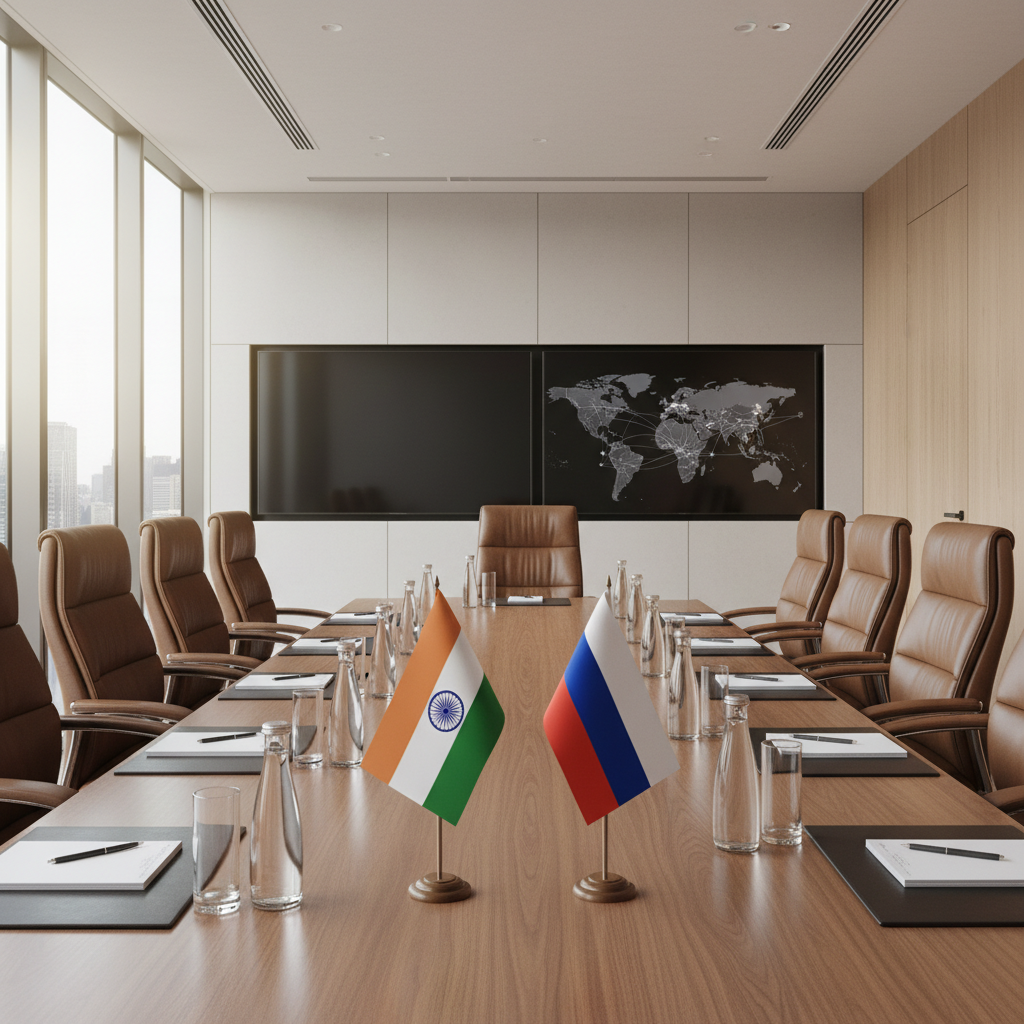
The U.S.-India relationship has been considered one of the most important and prosperous strategic partnerships formed in the post–Cold War era. Bilateral ties were especially strengthened over the past two decades as Washington and New Delhi developed a close working relationship in key areas such as defense, trade, and intelligence. Today, the relationship finds itself one of its lowest points amid a severe erosion of trust between the two sides over tariffs on Indian goods, oil purchases, and what each sees as zero-sum alignment with China and Russia.
“The reality is that we’re in a situation in the U.S.-India relationship where the premises and assumptions of the last 25 years — that everybody worked very hard to build, including the president in his first term — have just come completely unraveled,” said Evan Feigenbaum, an expert on South Asia at the Carnegie Endowment for International Peace. “The trust is gone.”
Last month, President Donald Trump put broad tariffs on Indian imports in retaliation for Delhi continuing to purchase Russian oil. The tariffs begin at 25 percent but will double to 50 percent on August 27 if India doesn’t alter its trade behavior. Instead of pressuring India to stop buying from Russia, the tariffs appear to be strengthening Moscow’s ties with Delhi and even with Beijing.
In the past month, India’s national security adviser met in Moscow with his Russian counterpart, Foreign Minister Subrahmanyam Jaishankar held high-level meetings in the Russian capital, and Chinese Foreign Minister Wang Yi wrapped up a visit in New Delhi. Prime Minister Narendra Modi is set to visit China for the first time in more than seven years, and he is also expected to host Russian President Vladimir Putin in Moscow later this year. Kugelman, a South Asia analyst at the Washington-based Wilson Center, says there is substance to India’s pivot east.
“They view themselves as being forced into these arms and they don’t like it. You see that in Indian public opinion,” Feigenbaum said. “They’re signaling very clearly that they view that as interference in India’s foreign policy, and they are not going to put up with it.”
India at first halted Russian oil imports after Russia invaded Ukraine, but state-run refiners started buying again after Moscow offered discounts of six to seven percent. As a result, Russia now accounts for 35 percent of India’s crude imports. Prior to the Ukraine war, Moscow represented 0.2 percent of that figure. Russia has seized the opportunity to increase what it offers India. On August 11, Deputy Prime Minister Denis Manturov told Indian media that Moscow would continue providing crude, oil products, thermal and coking coal, adding that Russia sees “potential for the export of Russian LNG.”
Tact or Substance?
Feigenbaum and Kugelman, who is based in Washington, say there are a mix of posturing and realignments in New Delhi’s pivot to Russia and China. Kugelman noted that the Trump administration’s tariffs on Indian goods are only part of the reason India is seeking to warm ties with Moscow. “We’ve actually seen indications for almost a year of India wanting to ease tensions with China and strengthen relations, mainly for economic reasons. But the Trump administration’s policies have made India want to move even more quickly,” Kugelman said.
Feigenbaum echoed this view but added that New Delhi was likely to “double down on some aspects of its economic and defense relationship with Russia — and those parts are not performative.”
India’s military had already started buying from U.S., French, and Israeli suppliers even before the Ukraine war in order to diversify away from Russian arms. After the invasion began, however, India’s energy purchases with Russia more than tripled. “This only confirms India’s belief that, yes, the U.S. can’t be trusted, whereas Russia can — because Russia is always going to be there for India no matter what,” Kugelman said.
Feigenbaum also noted Modi was using the moment to burnish his domestic political credentials. “For Modi, this is an opportunity to portray himself as someone who stands up for India, not in a militaristic way but in a kind of economic-sovereignty way,” Feigenbaum said. Modi has doubled down on his image as a defender of Indian sovereignty at home. He has framed his decision to continue buying Russian oil as protecting the livelihoods of farmers, small businesses, and young workers who are among the most important voter blocs for his Hindu nationalist Bharatiya Janata Party.
India had already given ground on key U.S. demands, such as tariff reductions, early in the war. Kugelman said New Delhi had little room to move given it had already compromised on major areas. “Because of those concessions, India needs to be careful about signaling further willingness to bend. This is one reason there was no trade deal — Modi put his foot down,” Kugelman said.
But anger in Washington is still building. Navarro, the former White House trade adviser, wrote in the Financial Times that India’s Russian oil purchases are “opportunistic” and “deeply corrosive.” In the op-ed, Navarro urged the administration to maintain and increase tariffs in order to put pressure on India’s “access to U.S. markets — even as it seeks to cut off the financial lifeline it has extended to Russia’s war effort.”
Spot the Difference
In 2008, then-President George W. Bush signed a nuclear deal with India, giving it access to American fuel and technology despite India not being a signatory to the Non-Proliferation Treaty. The agreement was a major breakthrough for both sides at the time as they still had many contentious issues on which they found it difficult to agree. The U.S. and India overcame the test of managing serious differences over contentious matters such as tariffs, visas, and intellectual property rights while preserving the relationship. That is not happening today.