
- calendar_today August 24, 2025
.
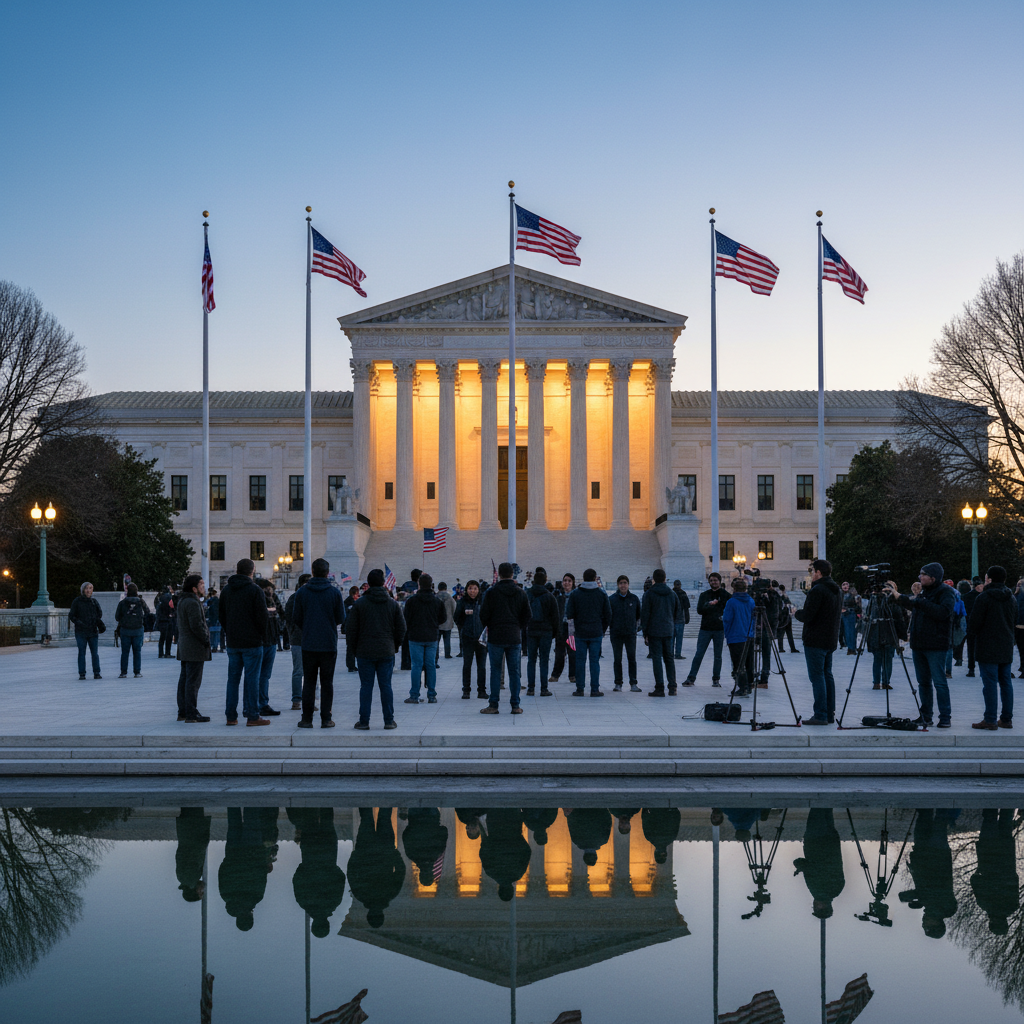
Tuesday night, the Trump administration asked the Supreme Court to step into a fast-moving dispute over billions in foreign aid spending that Congress already appropriated.
The move came in the form of an emergency appeal the administration filed late on Tuesday, and will return the fight over U.S. Agency for International Development (USAID) funding to the high court for the second time in six months.
The issue in the case is nearly $12 billion in funds that the Trump administration wants to hold back from USAID, which Congress specifically set aside to spend on foreign aid. That aid is supposed to be obligated — or set to be paid out — by the end of the fiscal year on Sept. 30. After Trump returned to the White House in January, he immediately issued an executive order on his first day back in office instructing the federal government to put a freeze on nearly all foreign aid spending.
The order quickly became the subject of a court fight. In February, U.S. District Judge Amir Ali in Washington, D.C., blocked the freeze and ruled that the White House needed to release the funds that Congress already set aside for foreign aid projects. That meant the Trump administration needed to restart payments on billions in USAID grants.
But the Trump administration has not given up on the issue. Earlier this month, the U.S. Court of Appeals for the D.C. Circuit heard oral arguments in the case and then reversed Judge Ali’s order in a 2-1 ruling.
The D.C. Circuit’s majority opinion, written by George H.W. Bush appointee Judge Karen L. Henderson, concluded that the plaintiffs in the case — foreign aid groups that had sought the court order to restore their grant payments — lacked sufficient legal grounds to bring the lawsuit in the first place. In her ruling, Henderson said that the plaintiffs did not have a valid “cause of action” under the legal doctrine known as impoundment.
While the Trump administration celebrated the D.C. Circuit’s decision as a major victory, the lower court has yet to issue a formal mandate that would end Judge Ali’s order and set the court of appeals’ ruling in place. That has left Judge Ali’s ruling — which set the payment schedule for foreign aid grants — in effect. The Trump administration, however, is now racing to get the case before the Supreme Court before the start of the next fiscal year on Oct. 1, when it would otherwise be forced to disburse the full $12 billion on foreign aid projects.
Emergency Appeals to the Supreme Court
On Tuesday, U.S. Solicitor General D. John Sauer — who filed the emergency request in the Supreme Court — argued that the government will otherwise be “forced to rapidly obligate some $12 billion in foreign-aid funds” by the Sept. 30 deadline.
“The parties are stuck in litigation that the district court — in our view, erroneously — has foreclosed from taking on its merits. Nor, we say, should the court take it up on this expedited basis at all,” Sauer wrote in the filing.
Sauer went on to argue that, if the Supreme Court does not get involved and force the administration to release the money, that would “effectively foreclose our appeal” and hand a “judicial victory” to the plaintiffs.
“The district court’s order was based on its view that certain statutes, including the Impoundment Control Act (ICA) and the Administrative Procedure Act (APA), permitted a decision in favor of appellees in all circumstances. We respectfully disagree,” Sauer added.
The parties in the case, a coalition of foreign aid groups that have seen their grants stalled, disagree. In their case, the plaintiffs are trying to make the opposite argument of what the administration is making in its Supreme Court appeal. They say that, as a general matter, a president does not have the authority to rescind a spending bill that Congress already appropriated.
As far as statutory grounds for the case, the plaintiffs have pointed to two laws in particular as the legal basis for their challenge. One is the Impoundment Control Act, also known as the ICA. The ICA is a law that was passed by Congress in the 1970s to rein in executive authority over the federal budget. The other is the Administrative Procedure Act.
The Supreme Court heard a similar case earlier this year and ruled on a narrow 5-4 basis, upholding the lower court’s ruling that the administration needed to restart the aid payments. The funding will now need to be paid out by September 30.