- calendar_today August 25, 2025
Endurance Fever: How Marathons and Triathlons Are Capturing American Hearts
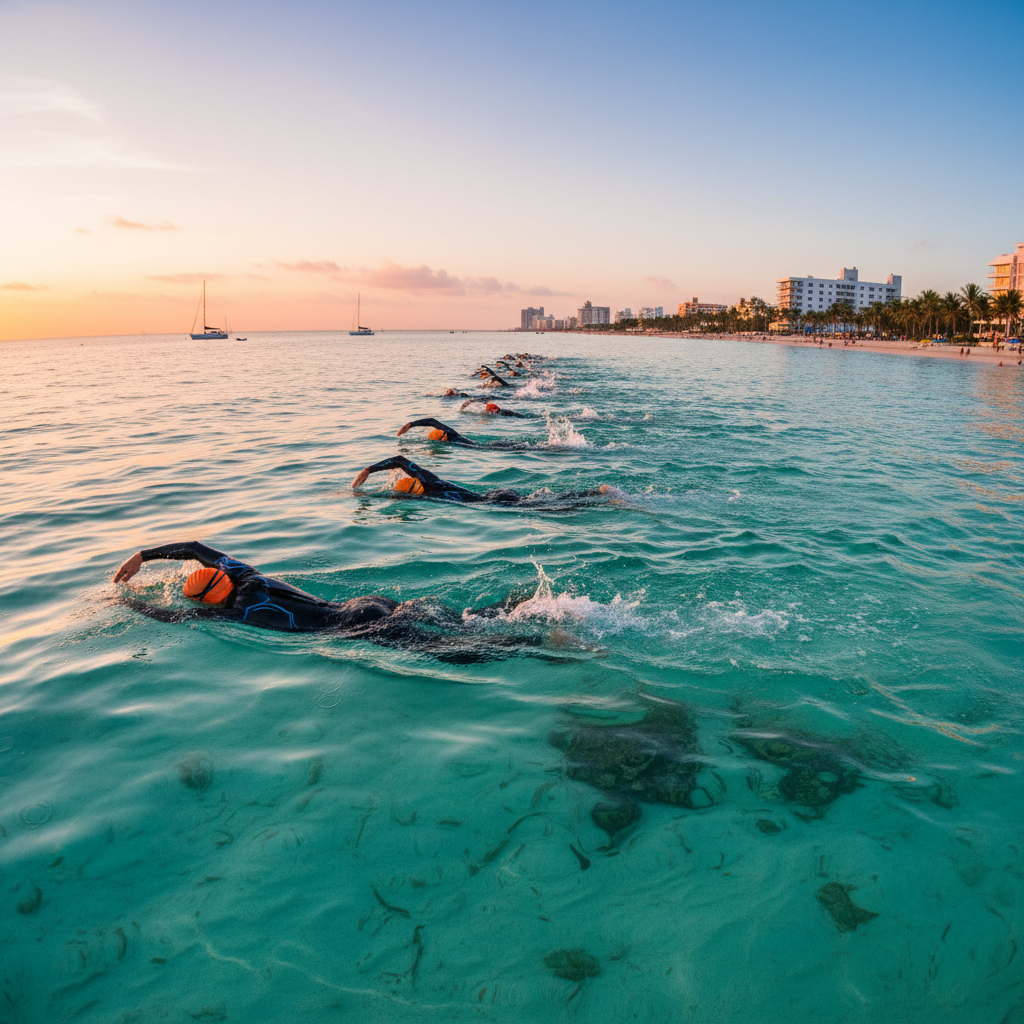
The sun hasn’t yet crested over Miami Beach as hundreds of wetsuit-clad figures slice through the turquoise waters. On the opposite coast, Mount Tamalpais trails in Marin County buzz with the energy of dawn patrol runners. Meanwhile, in the heartland, cyclists draft through Kansas wheat fields that stretch to the horizon. Spring 2025 has unleashed an unprecedented wave of endurance sports passion across America.
Tom Jackson, a Chicago firefighter, wipes sweat from his brow after leading his station’s morning training run. “It’s wild,” he says, grinning. “Half our crew is training for the Lake Michigan Triple Crown now. Last year, most of us couldn’t swim 100 yards.” The Triple Crown, a series of three Olympic-distance triathlons spanning the Great Lakes states, has become a proving ground for America’s newest breed of athletes.
This nationwide transformation is reshaping communities in unexpected ways. Church groups in Atlanta now host pre-dawn training runs. Denver tech startups have replaced happy hours with group rides through the Rockies. In Boston, morning lap swimmers share lanes with aspiring triathletes, creating unexpected friendships in the chlorinated dawn.
The statistics are staggering. Registration for endurance events has surged 90% since late 2024. But perhaps more telling are the stories behind the numbers. Maria Suarez, a grandmother of four from Phoenix, completed her first sprint triathlon last month. “My grandkids were at the finish line,” she beams. “Now they’re asking when they can start training.”
Urban landscapes are evolving to meet the moment. Cities are converting abandoned rail lines into running paths, transforming industrial waterfronts into open-water swimming venues, and redesigning streets to accommodate the growing peloton of cycle commuters. The change is visible from Seattle’s renovated waterfront to Baltimore’s harbor, where morning swimmers now outnumber the fishing boats.
Local economies are riding the wave. Specialized retailers report equipment sales doubling since January. Training centers are expanding to meet demand, and new coaching businesses are springing up weekly. Hotels near popular race venues are creating specialized packages for athletes, complete with secure bike storage and pre-dawn breakfast options.
The technology sector has embraced the trend. New apps connect athletes with training partners who match their pace and goals. Smart watches now offer coaching features that adapt to individual progress. Virtual reality systems allow winter-bound athletes to train on simulated versions of famous race courses.
“What we’re seeing is more than a fitness trend,” explains Dr. Rachel Martinez, a sports psychologist in San Francisco. “These endurance events are becoming modern rites of passage. People are discovering their limits exist largely in their minds.”
The movement is democratizing elite sports. Community programs in cities nationwide provide equipment and training to underserved neighborhoods. Corporate wellness programs increasingly include endurance sports training. Veterans’ groups are using marathon training as a tool for building post-service community.
Race directors are innovating to welcome newcomers. The Southwest Desert Series introduces beginners to endurance sports through progressive distances. The Pacific Northwest Trail Marathon series combines racing with environmental education. Even traditional events like the Philadelphia Distance Classic have added mentorship programs for first-time participants.
As summer approaches, every weekend brings a new slate of events. From Vermont’s covered bridge marathons to Hawaii’s volcanic triathlon courses, Americans are reimagining their relationship with endurance sports. Training groups meet in predawn darkness, bound together by shared goals and the simple joy of movement.
“This isn’t just about finishing races anymore,” says Kevin O’Brien, a former NFL player turned endurance coach. “It’s about discovering what we’re capable of, together. Every finish line is a starting line for someone else.”
The forecast for fall 2025 suggests this fever isn’t breaking anytime soon. Race calendars are filling faster than ever, and waiting lists grow longer by the day. America’s endurance revolution is redefining what’s possible, one stride, stroke, and pedal stroke at a time.