- calendar_today August 27, 2025
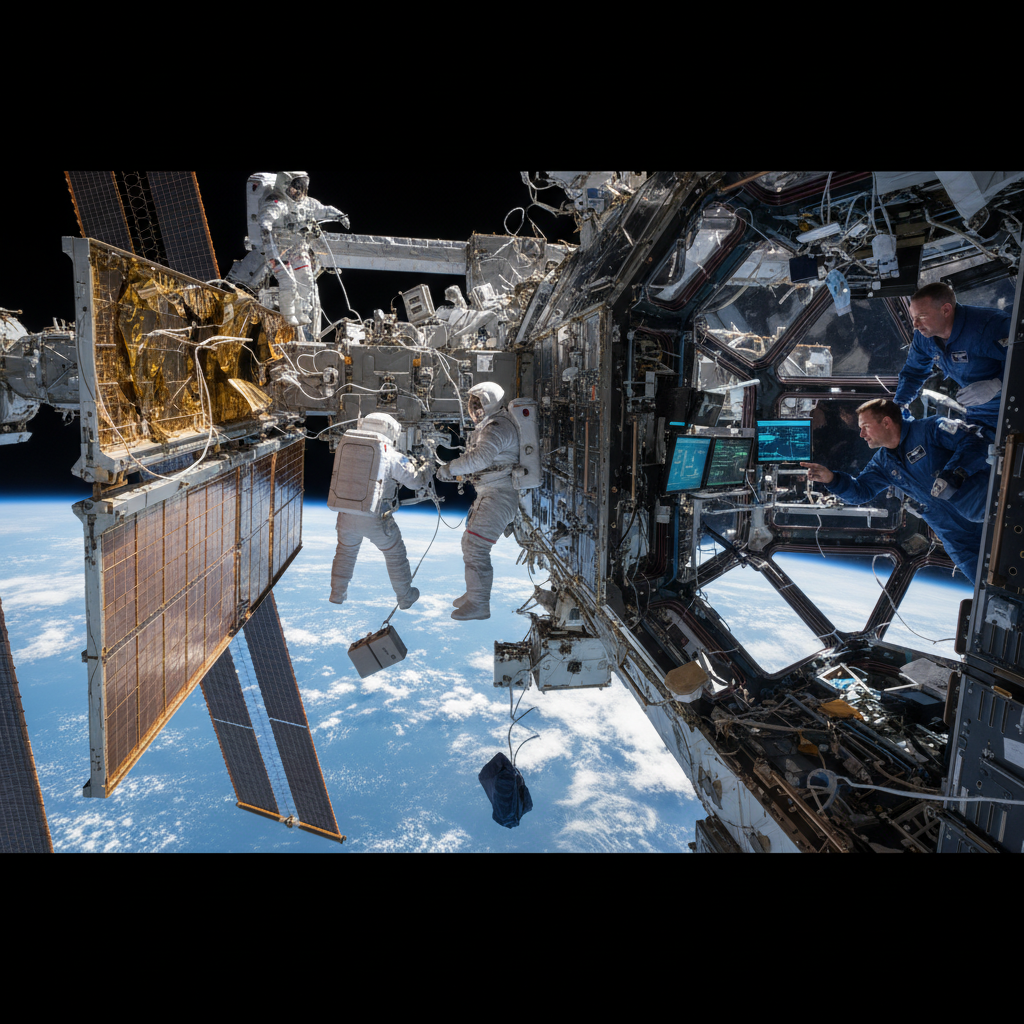
The International Space Station (ISS) faced a new leak that forced NASA to postpone an upcoming crew mission. The agency has not released any public information about the incident but internal sources reveal that officials are genuinely alarmed.
And with good reason: The space station has displayed signs of strain multiple times throughout its over twenty-year orbit around Earth. The gradual passage of time and mounting pressure are finally beginning to reveal themselves.
A Leak That Won’t Quit
Leaks on the ISS aren’t new. A persistent air leak has been troubling the space station since 2019 with the Zvezda service module showing the most noticeable impact. The Russian Zvezda service module stands as one of the original components from the early 2000s launch which remains essential to the ISS framework. The air leak problem exists in the PrK or transfer tunnel which serves as a connection between Zvezda and the docking ports for Soyuz crew capsules and Progress resupply ships.
Russian cosmonauts made several attempts throughout the years to repair the leak. The air loss has been reduced after each repair attempt but not completely eliminated. The station loses about two pounds of air daily because of this persistent leak. The leak is not catastrophic yet remains suboptimal for operations 250 miles above Earth.
The workaround? The PrK hatch should remain shut except when it is essential to open it.
So, What Changed?
Russia’s space agency Roscosmos announced this month that they accomplished complete sealing of the PrK module. NASA confirmed Roscosmos’ report by observing that the latest repair efforts seemed to work well. The leak rate inside the module stopped completely according to both agencies.
That should’ve been good news.
Air pressure throughout the station started to decrease in an unexpected way. The PrK leak had been resolved yet the station kept losing air which remained unexplained.
The Mystery Deepens
Two sources told Ars Technica that the likeliest explanation isn’t comforting: The seals on the hatch connecting to the PrK module have developed leaks according to two sources who spoke to Ars Technica. If faulty seals are the source of this situation then air might be redirected into the PrK module which would account for the stable pressure inside while the station still experiences overall air loss.
The situation remains completely unclear for everyone involved. NASA remains vigilant over the leak while they establish contingency plans for every potential scenario.
A high-level industry expert expressed serious concern to Ars. The leadership of NASA’s space station program feels concerned about the current situation.
A Launch Delay—and Growing Risk
NASA rescheduled the launch of Axiom Mission 4 which was supposed to transport four astronauts to the station as a commercial flight. NASA indicated that additional time was required to fully comprehend the ongoing leak issue.
NASA and Roscosmos will use the postponement of Axiom Mission 4 to evaluate the situation and decide if further troubleshooting steps are required.
NASA has moved forward with a tentative launch date of June 18. The future launch date depends completely on the developments of the leak situation in the next days.
Worst-Case Scenario? Let’s Talk Fatigue
The leak itself is worrying. But what really has experts on edge is what it might represent: a sign of high cycle fatigue. Metal structures often experience this well-known phenomenon. Imagine bending a paperclip—once, it flexes. Repeated bending leads to an eventual break. That’s fatigue.
The ISS consists mainly of aluminum which is susceptible to this type of stress. The space station contains components which entered orbit back in 1998. The International Space Station has endured over 29 years of micro-vibrations combined with docking stresses and temperature cycles.
Metal fatigue might lead to unexpected and disastrous failures of station parts in extreme situations. It’s not just a theory. Metal fatigue induced a sudden failure which caused Aloha Airlines Flight 243 to rip open during its flight in 1988.
NASA knows the risks. NASA’s internal evaluations place structural cracking on the ISS at the top level of concern within its 5v5 risk matrix which evaluates hazard likelihood and severity.
And Yet—Silence
Up to this point NASA has made limited public statements. Several reporters and concerned observers have asked questions but NASA has not yet scheduled any press conference. The only official word so far?
NASA confirms that International Space Station crew members carry out regular duties without any safety issues.
And that’s reassuring—to a point. The space station experiences visible long-term wear which suggests that other problems may emerge alongside the existing metal cracks.