- calendar_today August 28, 2025
Why KPop Demon Hunters is Topping Netflix Charts Worldwide
Released earlier this June, KPop Demon Hunters has found fans all over the world, quickly moving to the top of Netflix rankings. Within two weeks of its release, the animated film had racked up over 33 million views and is currently number two in Netflix’s global top 10 lists in 93 countries. Fans have created fan art, and requests for a sequel are being made with greater insistence every day.
The numbers tell only part of the story, however. Since its 20 June release, the two fictitious K-pop bands at the heart of the film, the good-girl all-female band Huntr/x and their prankster rivals Saja Boys, have entered real-world music charts, outselling the likes of BTS and Blackpink. Seven songs from the film have made it into the Billboard Hot 100, with its tracks occupying both the first and second places on the US chart on Spotify. The feat is noteworthy in itself as both positions were previously held by real artists.
The film itself is a heady mix of fantasy adventure and Korean pop music culture. It tells the story of three members of Huntr/x — Rumi, Mira, and Zoey — who, between lives of global stardom and record-breaking tours, are training to become Demon Hunters, the mythical protectors of the world. Their rivalry with the three members of Saja Boys leads to incredible stage performances and slick fight scenes, through a story about friendship, trus,t and being true to one’s identity. It’s a combination that has struck a chord with audiences around the world, with humour and moments of emotion set against a touch of fantasy.
The visuals and premise may have attracted viewers, but it is the music of KPop Demon Hunters that has given it a viral quality. For director Maggie Kang, a Korean-Canadian, making a Korean-pop inspired film was a nod to the artists she grew up listening to. Music is also integral to the plot, as the film’s characters use music to banish evil and save the world. The soundtrack is made an almost seamless part of the film’s story, rather than acting as an interruption or digression. It gives the film a surprising degree of maturity, says Lashai Ben Salmi, a community leader specialising in Korean cultural diplomacy in Europe.
In order to ensure a high-quality soundtrack, Kang and fellow director Chris Appelhans collaborated with a Korean music label and brought in heavy hitters from the K-pop world. Teddy Park, who worked with Blackpink on their hit “How You Like That”, and Grammy Award-winning Lindgren, known for producing albums for BTS and TWICE, co-wrote original music for KPop Demon Hunters. The result is a collection of songs that sit comfortably next to the genre’s real-world hit songs. Amanda Golka, a Los Angeles-based content creator who is not normally a K-pop fan, has been swept up by the trend. “I have been blasting the soundtrack from Spotify every time I’m in the car,” Golka shares. “It’s incredible to watch people from other parts of the world enjoy a taste of Korean culture.”
Tradition Combined with Global Trend
The music isn’t the only thing lending an air of authenticity to KPop Demon Hunters. While K-pop, Korean dramas (K-dramas),, and Korean cinema have gained a mainstream following in the US and other Western markets in recent years, KPop Demon Hunters deepens this representation in film. The film includes everyday slices of life in Korea, from dining customs to shots of footage at traditional locations in Seoul. Shots feature the ancient city walls of Seoul, Hanuiwon folk clinics, communal bathhouses, and the Korean flag flying at Namsan Tower. These elements represent a break from stereotype, giving Korean audiences a rare opportunity to see themselves represented respectfully and accurately onscreen.
Members of the production team had visited South Korea for the purpose of bringing these scenes to life. They scouted out folk villages, took photographs of the streets of Myeongdong, and consulted on traditional Korean clothing. Details down to the level of lip movement and character reactions have been shaped by a strong sense of cultural accuracy. While the film’s characters speak English, their movements during conversation are set to Korean pronunciations, making their facial expressions feel authentically Korean. Korean language words and lyrics are interspersed in the plot at various points.
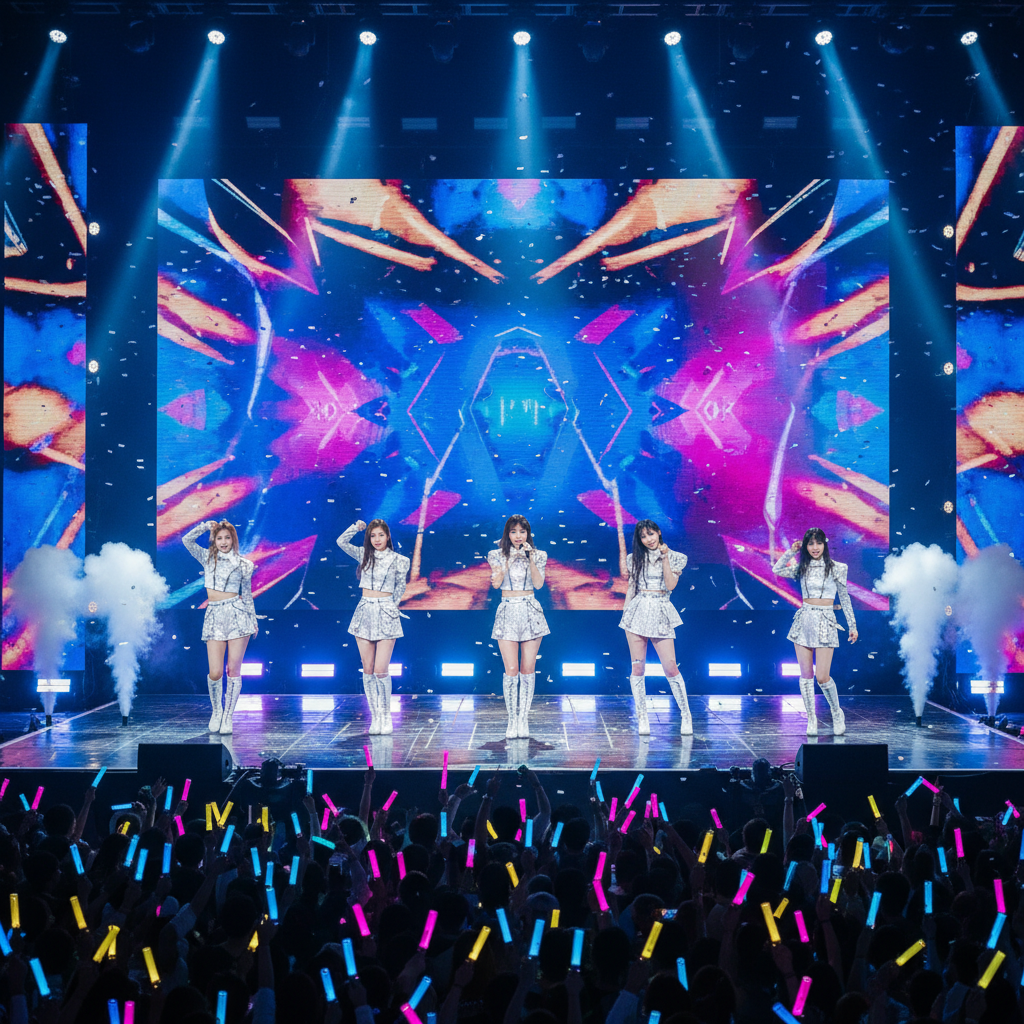
The film also gives a real sense of what being a K-pop fan is like. Shots feature fan signing events, the light sticks glowing in a sea of stage colours, Kalgunmu (mirror-perfect stage choreography), and Korean placards. The film paints a full picture of K-pop culture, rather than centring on a single group or era, making it relatable for casual viewers while also rewarding committed fans with easter eggs.
At its heart, though, KPop Demon Hunters is a coming-of-age film about self-acceptance and identity. Characters face struggles around identity and self, have to trust in themselves, and learn to be who they truly are. Golka observes: “Your friends may not understand right away, but they do love you and they will figure it out. I think that has resonated with people.”