- calendar_today August 7, 2025
Game Designers Warn of Collapse as Tariffs Hit Import Costs
The board game industry is a tight-knit one. Innovative, profitable, but just not quite enough to be considered a major piece of any economy, there’s also a certain camaraderie that cuts across the industry like few others. That sense of community was on full display this week as Jamey Stegmaier, the mind behind popular titles such as Scythe, On Mars, and Wingspan, among many others, lashed out against a new 54 percent tariff on goods produced in China and imported to the United States.
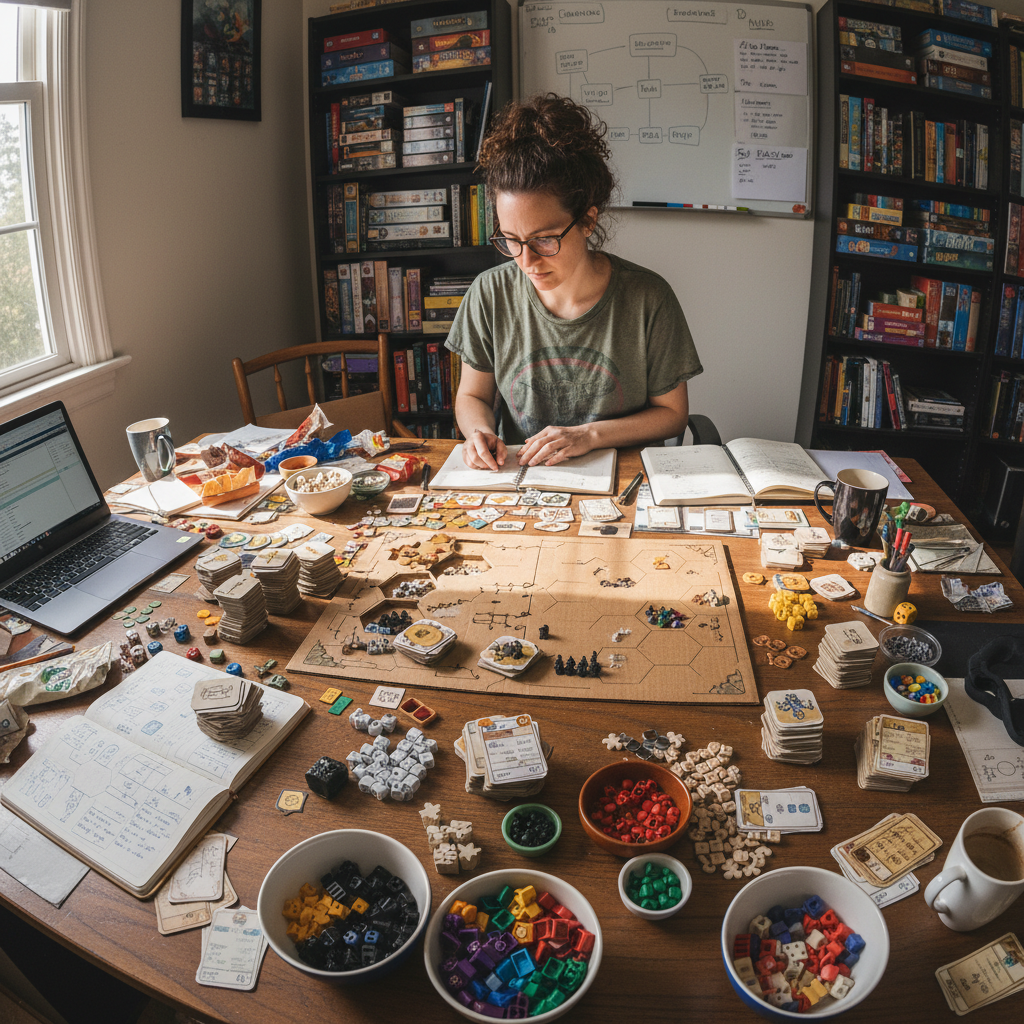
Stegmaier shared his feelings in an open blog post: “Last night I tried to work on a new game I’m brainstorming, but it’s tough to create something for the future when that future looks so grim. I mostly just found myself staring blankly at the enormity of the newly announced 54 percent tariff.” It was a vulnerable post for someone who has made some of the most popular games in the world. But it was also a sentiment shared by all corners of the industry.
Outsourced Production, Global Competition
For most U.S. publishers, the American board game market is built on manufacturing in China. Other countries like Germany have facilities, too (Germany is the spiritual home of modern tabletop gaming, after all). But even German factories are more focused on niche components, like printed cards. If you need to make a full game in one place, from custom plastic miniatures and wooden tokens to die-cut boards and specialty dice, you can go almost anywhere. But for American publishers, the easiest place to get the full gamut of custom production is China.
Producing those elements domestically is always an option. But in practice, it simply isn’t possible. Stegmaier recalls in his post being quoted $10 by a U.S. manufacturer for a standard, empty game box. He contrasted that to what the same $10 would buy him from a Chinese producer: The complete production and packaging of an entire game.
That imbalance is why the new tariff is so troubling. Most board game publishers in the U.S., but especially small and mid-sized ones, have razor-thin profit margins. They work by design to keep prices low and create the most buzz for customers. But the tariff means higher production costs almost overnight, with no opportunity to adjust and prepare.
Industry Reaction
Echoing Stegmaier, Meredith Placko, CEO of Steve Jackson Games, has also spoken out on the issue. Her company, famous for the game series Munchkin, is in the same position as most in the industry. They manufacture overseas for the same cost reasons as everyone else.
Some people ask, “Why not manufacture in the US?” I wish we could. But the infrastructure to support full-scale boardgame production—specialty dice making, die-cutting, custom plastic and wood components—doesn’t meaningfully exist here yet. I’ve gotten quotes. I’ve talked to factories. Even when the willingness is there, the equipment, labor, and timelines simply aren’t.
Meredith Placko, via The Games Journalist
For Placko, this isn’t just a matter of logistics. It’s an existential threat to the entire infrastructure. As she put it in her post, the new policy is “not just a policy change” but “a seismic shift for our industry.”
Rob Daviau, co-founder of Restoration Games and designer of such tabletop games as Pandemic Legacy, is also sounding the alarm. He’s been active on social media for months now, lamenting that “almost every business meeting since November has felt like an existential crisis about our industry.” In a recent interview with BoardGameWire, Daviau said he’s afraid the policy will lead to “a great collapse in the hobby gaming market in the US.”
Consumer Impact, Retail Outcry
The pain won’t be felt by publishers and designers alone, however. Gamers will likely see an impact soon, as well. The average new game at retail will likely see a price increase to compensate. Alternatively, games that might have been made with custom components will be made with cheaper ones in order to retain the same price. Still others may simply be scaled back or not released at all.
The fears for local game stores are just as real. Long battling an uphill fight against online sales, game stores are in danger of losing further business as gamers instead look to their collection (gamers famously have lots of unplayed games on their “shelves of shame”) or purchase new games online at cheaper prices.
“Within a few months, US companies will lose a lot of money and/or go out of business,” Stegmaier tweeted. “And US citizens will suffer from extreme inflation.”
Limited Remedies, Deep Frustration
One option, some publishers are arguing, is to route shipments from China through non-U.S. distributors, then sell the games in the U.S. That might be a remedy in some industries, but for U.S. companies, it’s a non-starter. Europe, for example, is less affected, but 65 percent of Stegmaier’s business is domestic. The cost will be there either way.
The measure also takes the funniest timing, at least for games that are already produced or in early production stages. If a game is still in design or budget, there’s some flexibility. But if the product is already printed and ready to ship from China, its tariff is already in place, and there’s nothing a publisher can do about it. “I have 8,000 games leaving a factory in China this week and now need to scramble to cover the import bill,” said Chris Solis, founder of Solis Game Studio in California, in a tweet.
Calls to Action, Uncertain Future
The Game Manufacturers Association (GAMA), a trade group that lobbies for board game publishers, has also been active on the issue. The group has held meetings with the U.S. Trade Representative to make their case and fight against the tariffs. To date, those efforts have had no impact.
As the dust settles, this is easily one of the most significant and damaging events in modern board game industry history. A community based around joy, creativity, and friendship, gaming now faces a future more uncertain than any other.