- calendar_today August 20, 2025
.
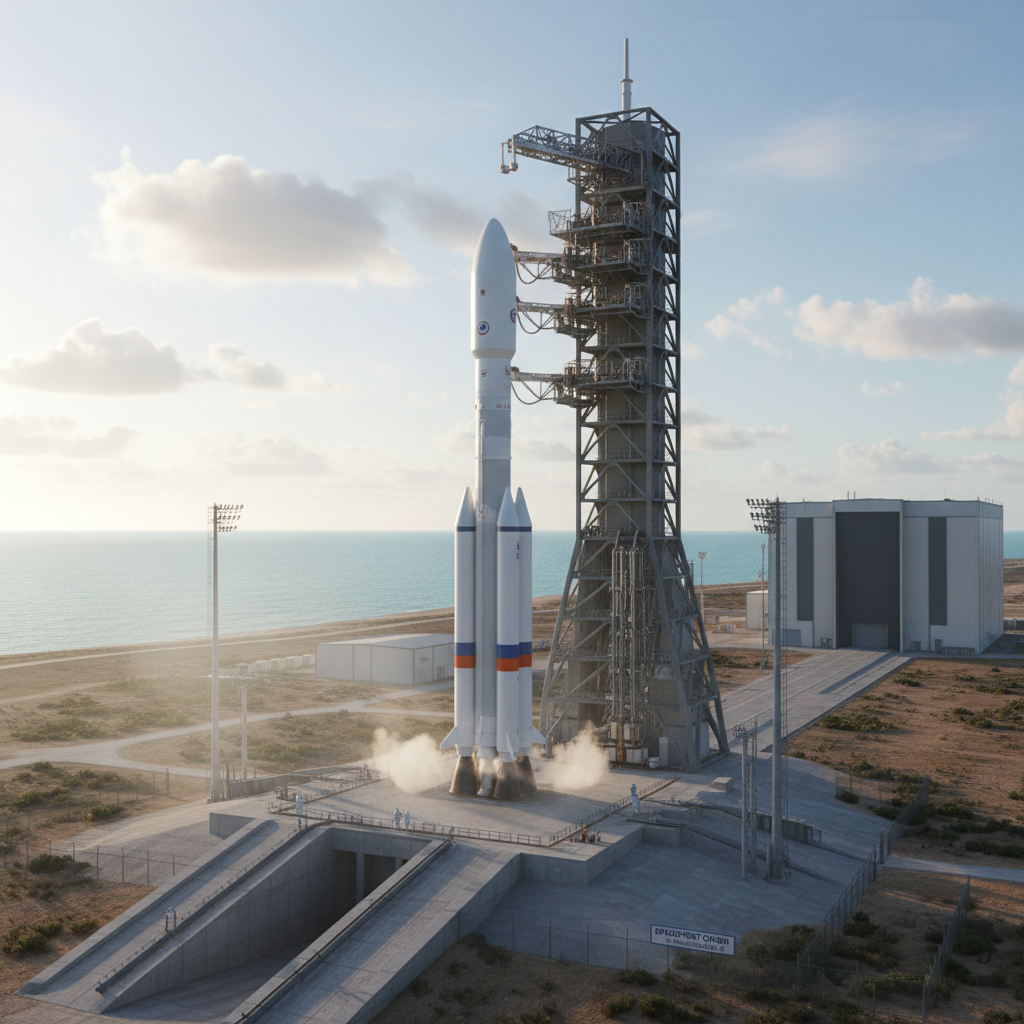
Russia’s latest rocket, the Soyuz-5, is expected to fly this year for the first time, before the end of December, a senior Russian space official said on July 19. Dmitry Bakanov, head of the country’s state-run space corporation Roscosmos, told the Russian state-run news agency TASS that it is “planning to launch in December,” and “everything is in place.”
That would make it the first flight of a rocket that was first announced more than ten years ago. Soyuz-5, which was also called Irtysh, is being developed by Roscosmos as an all-new space launch vehicle to replace the Zenit rocket, also of Soviet origin. Production of Zenit stopped in 2014 amid Russia’s annexation of Crimea. Zenit used Ukrainian-produced engines and was assembled in both Ukraine and Russia for years, until Russia’s invasion of Ukraine in 2022 and the subsequent Russian seizure of Yuzhmash, one of Ukraine’s largest rocket producers.
Zenit itself was based on the rocket called Zenit-2 first developed in the 1980s by the Yuzhnoye Design Bureau in Ukraine, as the Soviet Union’s version of the Shuttle-derived expendable launch vehicles being developed in the United States and Europe.
This means that Soyuz-5 represents not a major departure from Russia’s existing lineup of space launch vehicles, but a simplification and transition away from Soviet-era technology.
Details of Soyuz-5
The Soyuz-5 booster uses a similar layout to Zenit-2 but its propellant tanks are somewhat larger, giving it about 17 metric tons of lift capability to low-Earth orbit, putting it in the medium-lift launch vehicle class. This is comparable to SpaceX’s Falcon 9, but unlike the American rocket Soyuz-5 is not reusable and is designed to burn up in the atmosphere after one use.
Instead, its main feature is its engine, an RD-171MV, also developed by the Russian state-owned Energomash. The RD-171MV is a newer version of the engine that powered Energia, the Soviet Union’s only heavy-lift rocket, which never flew after the collapse of the Soviet Union.
It was used as the basis for Zenit’s core stage, but this Russian-made version of the engine does not use any Ukrainian components or designs. The RD-171MV is a kerosene-fueled engine that burns with liquid oxygen. It generates over three times the thrust of a NASA Space Shuttle main engine, making it by far the most powerful liquid-fueled rocket engine in the world.
Even with such a powerful engine, however, the Soyuz-5 is not a next-generation vehicle in the same way Falcon 9 or even the more recently retired United Launch Alliance’s Delta 4 and Atlas 5 rockets were. “Soyuz-5 is a modern Soviet rocket that uses a single, updated engine that was originally created by Ukraine,” Alex Meshalkin, an analyst at the Russia-based Central Design Bureau of Machine Building, told TASS.
A Bridge to Russia’s Future
Instead, its purpose is to bridge the gap between Russia’s existing heavy-lift Proton-M rocket—which is also being phased out—and what Roscosmos is still calling the “next generation,” the Soyuz-7 rocket family, also called Amur. The latter project was originally to fly at around the same time as Soyuz-5 but has slipped and is now not expected to be ready for launch before 2030.
The Soyuz-7 is the all-up replacement to both Soyuz-5 and the Proton-M, and is expected to use new engines burning kerosene and methane with liquid oxygen that will be reusable, although this appears to be moving slowly.
Until then, the Soyuz-5 is not a rocket that will make Roscosmos more competitive on the world market, despite lower manufacturing and launch costs compared to the Proton-M and its Zenit successor.
The rocket’s performance and characteristics may be sufficient for some Russian crew and commercial missions, but its foreign market potential will be limited by its cost, non-reusability, and a Russian space industry still suffering from a combination of sanctions, underinvestment, and the burden of its armed conflict with Ukraine.
Crew missions are unaffected because Russia has been able to keep flying Soyuz-2 and can simply move all commercial crew missions to that launch vehicle as well. Angara, a newer family of Russian rockets that should be able to take over the medium-lift work that Soyuz-5 is being built for, is also not an attractive option for most commercial customers because of their cost and still limited availability. Roscosmos will have to hope that Soyuz-5 can still find some niche customers among its present portfolio, which will be possible but not easy.
Conclusion
The Soyuz-5 is, however, a good first step in moving Roscosmos and the Russian space industry away from the hardware left over from the Soviet Union and into something truly new.
The fact that it has made it this far toward production is a small but important milestone for Roscosmos, and given all of the challenges it faces with reduced budgets and a state of war it is not a foregone conclusion that Roscosmos would have been able to do this much in time for a December launch.
With just three or four months to go until that first launch, it is possible that there may be yet another slip, but barring a complete disaster in preparation or something similar, Roscosmos’s new launcher should fly this year.