
- calendar_today August 13, 2025
While consumer spending has picked up and inflation has eased, the CRE market is operating on a different clock, one delayed by structural shifts, tighter lending, and evolving use cases for space.
Office Sector: The Permanent Work-From-Home Hangover
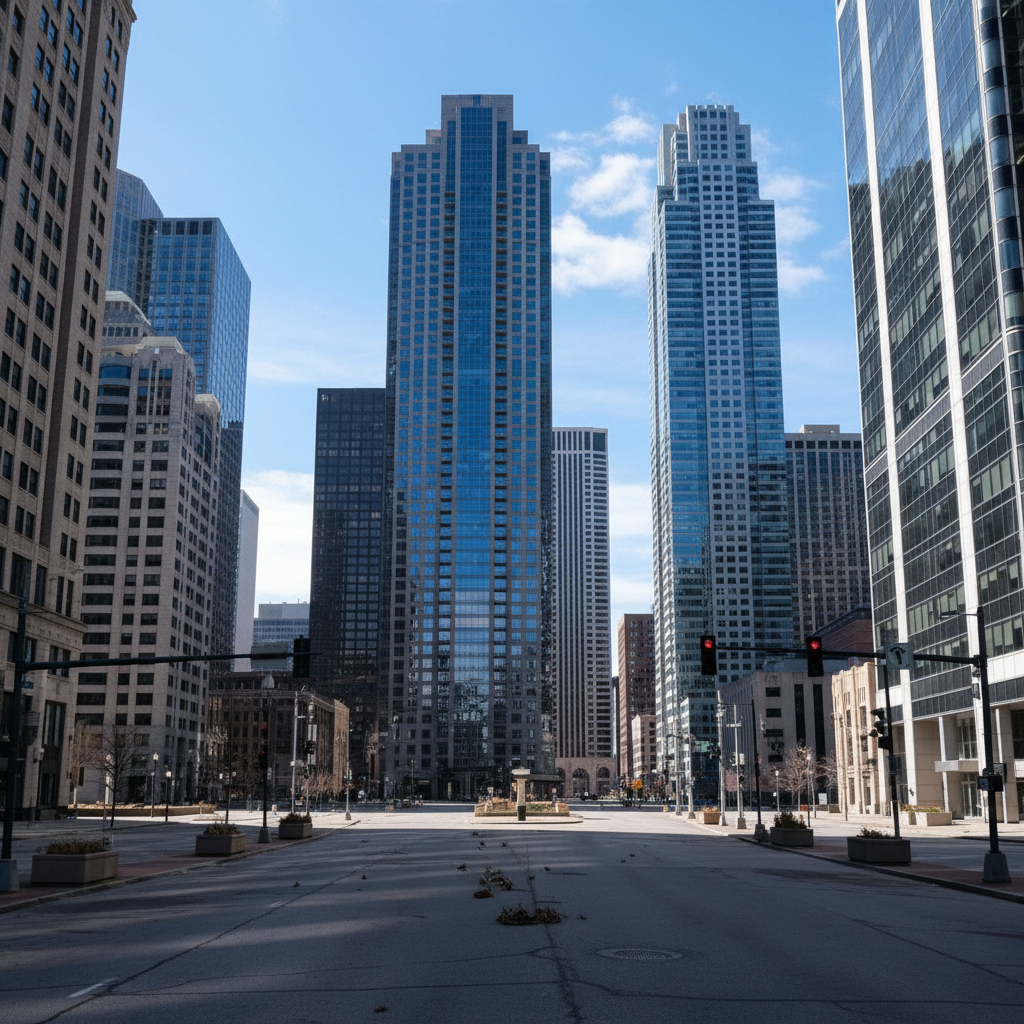
The most visible sign of CRE’s malaise is the empty office buildings in major metros. Vacancy rates in Q2 2025 have reached record highs in San Francisco (27.3%), Washington D.C. (23.1%), and Chicago (24.7%), according to JLL’s U.S. Office Market Snapshot.
Hybrid work policies have now become standard, with over 62% of large U.S. companies offering some version of remote flexibility, based on a Gallup survey. This has led not just to downsizing leases, but to a complete rethinking of how office space functions — if it’s needed at all.
“There’s no going back to pre-pandemic space usage,” said Amy Erixon, Head of Global Investment at Avison Young. “The office market is undergoing a slow, painful recalibration.”
Landlords are responding with record-high incentives, but leasing activity is still well below pre-2020 benchmarks.
Retail: A Slow Reimagining of the Storefront
America’s shopping habits have changed — possibly for good. In 2025, consumers still prefer e-commerce for essentials and convenience, leaving traditional retail corridors vulnerable. While foot traffic has improved in mixed-use developments, indoor malls are losing relevance fast.
Data from Green Street Advisors indicates that more than 25% of regional malls are expected to close or be repurposed by 2026. Brands like Foot Locker, Macy’s, and Joann have significantly cut physical store counts in favor of online engagement and experiential showrooms.
Still, there’s a silver lining: Retail-to-residential conversions and healthcare-focused redevelopment projects are gaining traction, especially in urban areas with housing shortages.
Industrial Market: From Booming to Balanced
Once CRE’s most dynamic segment, the industrial real estate market has begun to level off. The pandemic-era boom — fueled by e-commerce warehousing and supply chain reshoring — has slowed, revealing an oversaturated market.
Cushman & Wakefield’s Industrial Marketbeat Report shows that demand for new warehouse space has declined in 2025, with a 34% drop in leasing activity compared to 2023. Vacancy rates are rising in formerly hot markets like Atlanta, Dallas, and Phoenix.
This softening is attributed to normalization in e-commerce growth, increased automation, and shifting global logistics trends.
Multifamily: High Demand, But High Barriers
Multifamily construction was supposed to be a buffer for CRE portfolios, but even this segment is facing pressure. Interest rates remain historically high, and construction financing is harder to secure.
The U.S. Census Bureau reported a 10.8% drop in multifamily housing starts in the first five months of 2025 compared to the same period in 2024. Projects in gateway cities are especially delayed due to zoning delays and building cost volatility.
Rental growth is also slowing. Redfin reports average rent increases of just 1.4% year-over-year, compared to nearly 6% in 2022. With renters reaching affordability limits, the pace of ROI for new developments has weakened.
Policy and Local Regulation: A Mixed Bag
In cities like New York, Boston, and Los Angeles, new rezoning initiatives are underway to convert underused offices into housing. While positive in theory, these proposals face opposition from community boards, historic preservation groups, and financing gaps.
Meanwhile, California’s split-roll tax proposals and New York’s commercial rent stabilization debates are creating investor hesitancy. Regulatory uncertainty remains one of the top barriers to CRE recovery in high-cost states.
At the federal level, CRE-specific support is limited. However, Congress is reviewing a new adaptive reuse tax credit bill, which could be a game-changer for developers pivoting away from traditional asset classes.
Confidence Gap: Perception Now Shapes Reality
Perhaps more damaging than data is sentiment. A confidence gap is emerging between asset owners and institutional investors. The Nareit Investor Sentiment Index shows declining optimism for office, retail, and even multifamily assets.
In Q2 2025, nearly 40% of surveyed investors said they would reduce real estate exposure in the next 12 months. Some have shifted toward infrastructure or private credit — seen as safer bets in today’s risk-averse environment.
“CRE is going through a trust deficit,” noted Priya Chowdhury, Senior Analyst at Fitch Ratings. “Until there’s more clarity on valuations, many investors will remain on pause.”
What Could Turn the Tide in Late 2025?
There are a few green shoots to watch:
- Federal Reserve signaling rate stability through the rest of the year
- Growing traction for zoning reform and tax incentives for reuse
- Rising interest in climate-resilient and ESG-focused developments
However, none of these are quick fixes. The commercial real estate sector is in a longer transition, not a brief downturn. Its future will hinge on creativity, flexibility, and navigating a drastically different demand landscape.
Despite economic recovery in many sectors, U.S. commercial real estate remains on shaky ground in 2025. With high vacancies, cooling demand, investor hesitation, and regulatory complexities, the road ahead is uncertain and slow.
For developers, brokers, and investors, patience may be the most valuable asset this year.