
- calendar_today August 18, 2025
Trade Tensions Return to the Forefront
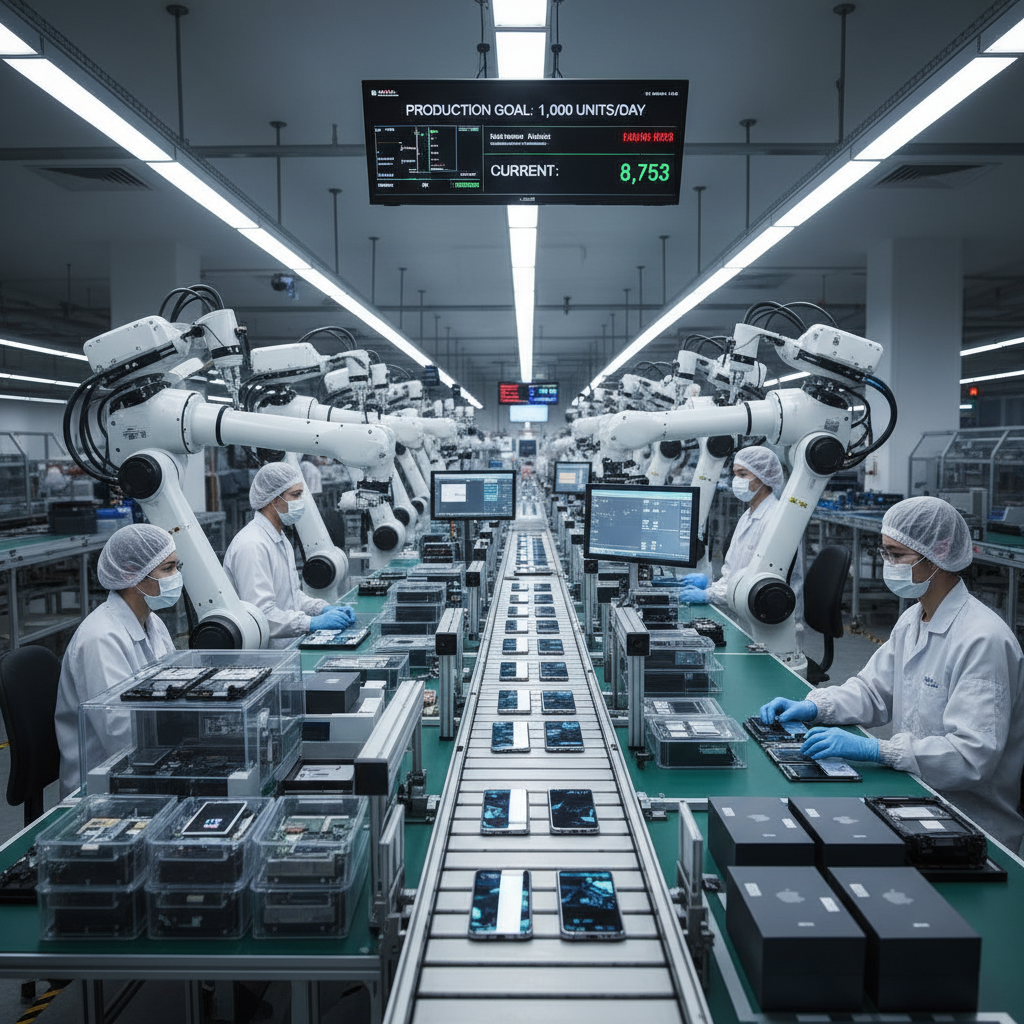
The reemergence of tariffs under the current U.S. administration has once again placed multinational manufacturers like Apple in the geopolitical crosshairs. A new wave of reciprocal duties on Chinese-made electronics has reignited old supply chain anxieties. Apple, still reliant on China for around 80% of its iPhone production, finds itself walking a familiar tightrope.
Although there have been calculated shifts towards India and Vietnam—moves some analysts interpret as hedges against political risk—the scale of these efforts hasn’t yet reached a point where they can meaningfully replace China. Industry sources suggest that it could take another three to five years for Apple’s India-based facilities to handle just 25% of iPhone output.
A temporary 90-day tariff exemption for some tech components has offered brief breathing room. Meanwhile, Apple’s headline-grabbing $500 billion U.S. manufacturing initiative is being hailed as a patriotic pivot—but skeptics question whether this long-term investment can insulate the company from near-term shocks.
AI Innovation: Falling Behind or Quietly Building?
Artificial intelligence is rapidly becoming the nucleus of tech competitiveness, and Apple’s perceived lag in this space has not gone unnoticed. While rivals like Google and Samsung have already infused their devices with robust AI capabilities—from real-time translation to predictive photo editing—Apple’s progress has been more incremental than disruptive.
Anticipation now surrounds iOS 18, which promises an overhaul of Siri and a slate of on-device intelligence upgrades. Still, there’s a lingering narrative that Apple is responding rather than pioneering. That storyline gained traction after iPhone shipments declined to 232 million units in 2024, marking a dip just shy of 1%, according to IDC.
Tech analyst Mia Sandoval notes, “Apple’s strength has always been in seamless user experience, not necessarily being first to market. But in AI, perception matters. Falling behind—even temporarily—can shift customer loyalty.”
Under the Hood: Solid Financials, Elevated Expectations
From a balance sheet perspective, Apple remains an enviable force. Trading around $208.36 per share, the company commands a premium valuation with a price-to-earnings (P/E) ratio of 31x. Gross margins hover at an impressive 46.52%, and though the dividend yield sits at a modest 0.48%, it’s viewed as a bonus rather than a driver.
Yet, some investors are taking a more cautious stance. Compared to other tech players in the Nasdaq-100, Apple’s valuation feels stretched—especially given slowing hardware sales. EPS forecasts of 7% growth in FY2025 and a projected 11% for FY2026 suggest stability, not breakout momentum.
Betting on Tomorrow: Where Apple Is Doubling Down
While hardware remains core, Apple’s shift towards services is rapidly accelerating. In Q1 alone, digital services—from Apple Music to iCloud—generated $23 billion, an 11% year-over-year surge. This segment is increasingly seen as the company’s buffer against volatile hardware cycles.
On the innovation front, wearable tech and spatial computing are where the company is planting seeds. The Vision Pro, while still niche, is drawing attention from enterprise users and developers, signaling potential beyond the consumer market. Apple Watch updates also continue to blur the lines between tech and healthcare, a sector that has quietly become central to Apple’s future.
Regional diversification is another key piece of the puzzle. New production sites in Southeast Asia aim to give Apple the flexibility to sidestep regional bottlenecks. It’s a slow, deliberate process—but one that could yield resilience over the long term.
What Are Analysts Saying?
Market sentiment remains cautiously optimistic. Out of 38 analysts surveyed in April 2025, 28 rated Apple as a “Buy” or “Overweight.” Yet, price targets range narrowly between $195 and $230, a reflection of tempered expectations rather than unbridled confidence.
The most frequently cited concerns include:
- Volatility in global trade policy
- Ongoing antitrust litigation in the U.S. and EU
- Slower-than-expected AI adoption
- A high stock valuation relative to peers
The Bigger Picture for Investors
What emerges is a picture of a company at a strategic crossroads. Apple isn’t in trouble—but it’s also not operating in cruise control. It’s a year of transition, where patience could reward long-term investors, but short-term traders may find more appealing plays elsewhere.
Ultimately, the decision to buy Apple stock in 2025 hinges on what kind of investor is asking the question. Is it someone looking for stability in a turbulent market? Apple delivers. Is it someone chasing exponential returns from bleeding-edge tech? Then perhaps it’s wise to wait and watch how the company repositions itself.
Have markets already priced in the roadblocks ahead, or are there still surprises lurking? That’s the billion-dollar question—and for now, Apple is making its bets more carefully than boldly.