
- calendar_today August 9, 2025
As trade tensions between the United States and China intensify in early 2025, investors are facing renewed volatility and tough choices about where to place their capital. New tariff rounds, retaliatory policies, and global supply chain disruptions have thrown financial markets into flux, highlighting the growing economic risks of geopolitical rivalry.
2025 Tariffs Ignite Fresh Disputes
In April, President Donald Trump initiated a new wave of tariffs on Chinese imports, imposing duties as high as 54% on a range of goods including semiconductors, electronics, and automotive parts. The administration cited long-standing trade deficits and national security concerns as justification for the aggressive trade posture.
In a rapid counter-response, China announced a 34% tariff on all U.S. imports, effective April 10, signaling a tit-for-tat strategy. According to Reuters, this move will significantly raise costs for U.S. exporters and reduce their competitiveness in the Chinese market.
China also implemented tighter controls on exports of rare earth minerals—crucial components for U.S. sectors like defense, electronics, and clean energy. The strategic materials restriction is expected to create ripple effects across industries, particularly those dependent on semiconductors and advanced battery systems.
Furthermore, Beijing has filed a formal complaint with the World Trade Organization, calling the U.S. tariffs a violation of global trade norms. While the WTO mediation process can take months or years, it adds another layer of uncertainty to global commerce.
How Markets Reacted
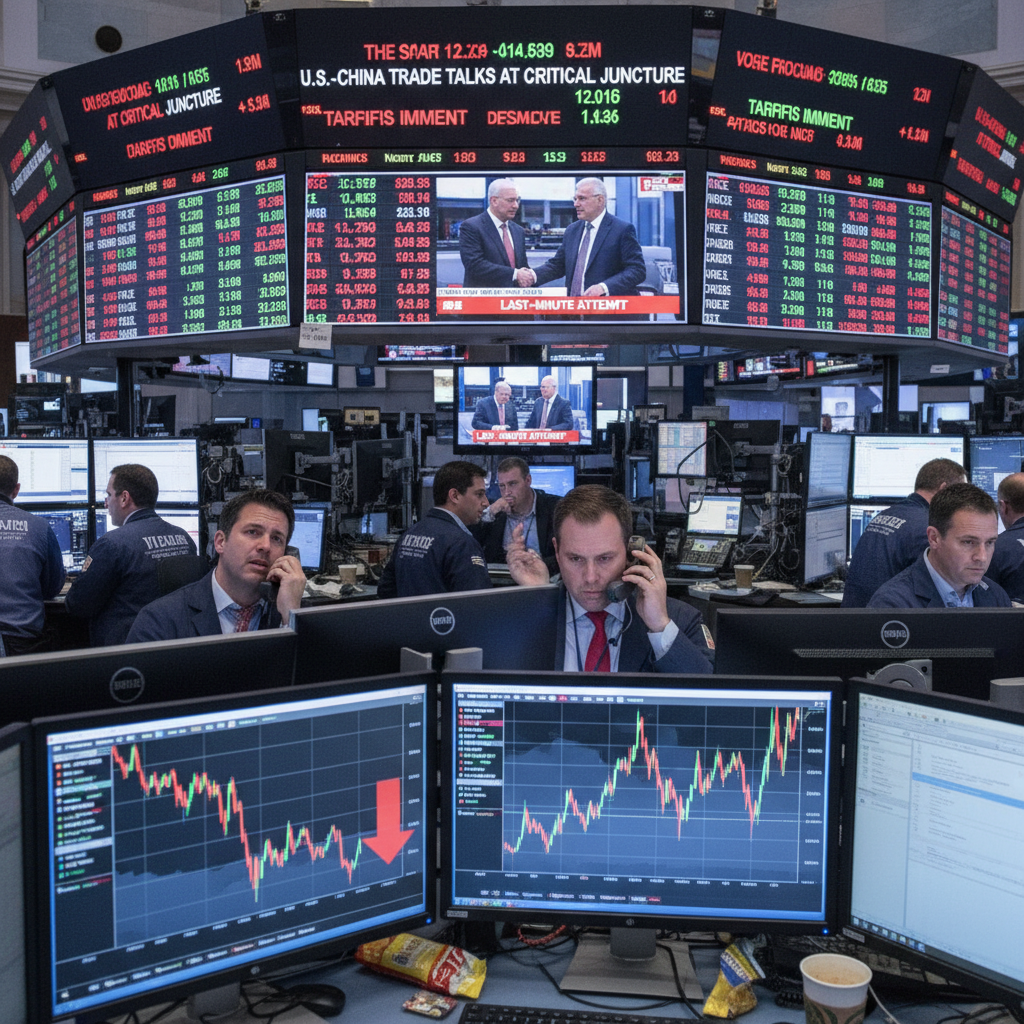
Wall Street didn’t take long to respond. Major U.S. indices dropped sharply in early April, with the S&P 500 and Nasdaq suffering their steepest consecutive losses since 2020.
Technology giants bore the brunt of the market correction. Apple saw its valuation fall by more than $300 billion, as reported by The Guardian, due to its manufacturing ties in China and worries over regulatory retaliation. Chipmakers like Nvidia and Qualcomm also faced headwinds from both rising production costs and reduced international demand.
Agriculture was hit hard as well. U.S. soybean and pork exports to China dropped 59% compared to early 2024, with Beijing shifting its sourcing toward countries like Brazil and Argentina, according to Reuters. For American farmers, this shift could mark a long-term reduction in market access.
Manufacturing and energy firms relying on Chinese rare earths are now scrambling for alternative sources. The disruption affects everything from electric vehicles to aerospace and defense systems, where components are highly specialized and difficult to replace.
Investment Strategies in a Turbulent Environment
For investors, the current climate calls for strategic repositioning. Financial advisors are recommending a few proactive moves:
- Broaden portfolio exposure across global markets and industries less tied to U.S.–China relations.
- Prioritize domestic companies in logistics, infrastructure, and American manufacturing, which may benefit from reshoring trends and federal incentives.
- Add alternative assets like REITs, commodities, and TIPS to hedge against inflation and geopolitical risks.
- Monitor developments closely—both policy decisions and company earnings reports—as rapid shifts in the trade landscape can significantly impact market dynamics.
Looking Ahead
The ongoing escalation in trade tensions may signal a broader decoupling of the world’s two largest economies. While this presents clear risks, it also opens opportunities for sectors poised to benefit from policy changes and shifting supply chains.
For now, vigilance, diversification, and strategic planning remain the most effective tools in navigating the complexities of U.S.–China economic relations in 2025.