- calendar_today August 21, 2025
.
Former U.S. President Donald Trump said Monday that the United States will accept 600,000 Chinese students for American college degrees, a move that appears to dial down tensions in the U.S.-China relationship after months of punitive tariffs and threats of visa bans for Chinese students and visitors.
Appearing from the White House, Trump insisted that the student exchange should continue despite his administration’s broad-based tariff hikes and recent threats to impose more bans. “I hear so many stories that we’re not going to allow their students,” Trump said to reporters. “We’re going to allow their students to come in. It’s very important, 600,000 students. It’s very important. But we’re going to get along with China.”
Trump’s comments on Monday follow months of escalating trade tensions and penalties between Washington and Beijing. The U.S. earlier this year announced a 145 percent tariff on all Chinese imports, with Beijing retaliating with a 125 percent tariff on all U.S. exports. The reciprocal economic hits stoked fears of a long-term trade standoff that could throw global markets into disarray.
Negotiators in Geneva struck a deal in May to put a hold on further tariffs, though Trump in recent weeks has threatened to reimpose new penalties. Last week, he suggested a 200 percent tariff on Chinese-manufactured magnets, saying the Asian nation has a near-complete monopoly on the world supply.
“China, intelligently, went and they sort of took a monopoly on the world’s magnets,” Trump said on Monday. “It’ll probably take us a year to have them.”
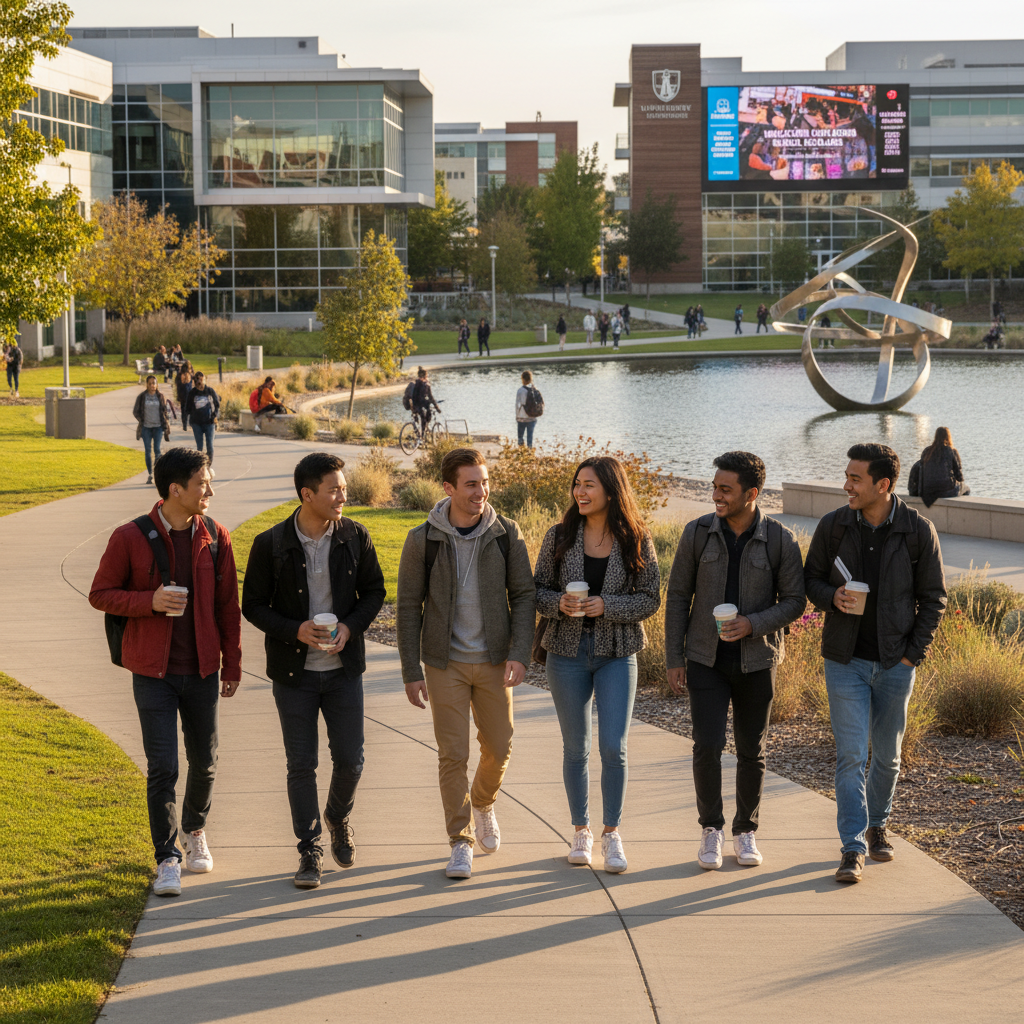
As it stands, there are about 270,000 students from China currently enrolled at U.S. colleges, Trump said. His new pledge of 600,000 would more than double the current population. Such an increase would also provide an immediate boost to American universities, which have long relied on international students for tuition payments.
The Vow Is A Departure From Past Stance On Chinese Students
The new announcement appears to depart from earlier policy rhetoric in the Trump administration. In May, Secretary of State Marco Rubio announced that the U.S. would “aggressively revoke” visas for Chinese people, especially those affiliated with the Chinese Communist Party or working on national security-related research. The news rattled academia, which pushed back on a possible loss of Chinese students and their tuition dollars.
Trump himself seemed to walk back the promise in June, telling reporters that he had “always been in favor” of Chinese students coming to the U.S. “In fact, this whole thing of students, they’re in great shape with me,” he said. “When it comes to Chinese students, I’ve always been in favor of that.”
On Monday, Trump furthered that trend, using his comments to suggest that student visas were still a bridgeable area in the U.S.-China relationship even as tensions on trade and other economic matters continue to fester.
Trump’s comments came a day before he was set to meet South Korean President Lee Jae Myung. When asked if he would be open to a meeting with Chinese President Xi Jinping, Trump suggested that he would. “I would like to meet him this year,” he said. “I think it’s a very important thing. As you know, we’re taking a lot of money in from China because of the tariffs and the different things. It’s a very important relationship.”
“It’s a much better relationship economically than it was before with Biden,” he continued. “But he allowed that. They just took him to the cleaners.”
Trump paired his announcement on student visas with blistering commentary on tariff hikes. It’s unclear whether his promises to allow Chinese students into the country will be matched by his actions. A top Trump administration official earlier this year expressed confidence in the new tariffs. “I think we have a 95 percent chance of being right and a 5 percent chance of China just lighting up the American economy,” the person said. “It’s still worth it.”
For now, Trump’s proposal will be watched closely in both Beijing and American schools. Chinese students already make up the largest international student population in the U.S., representing a $13 billion industry in tuition and living expenses. Expanding the numbers could have ripple effects across a variety of universities.