
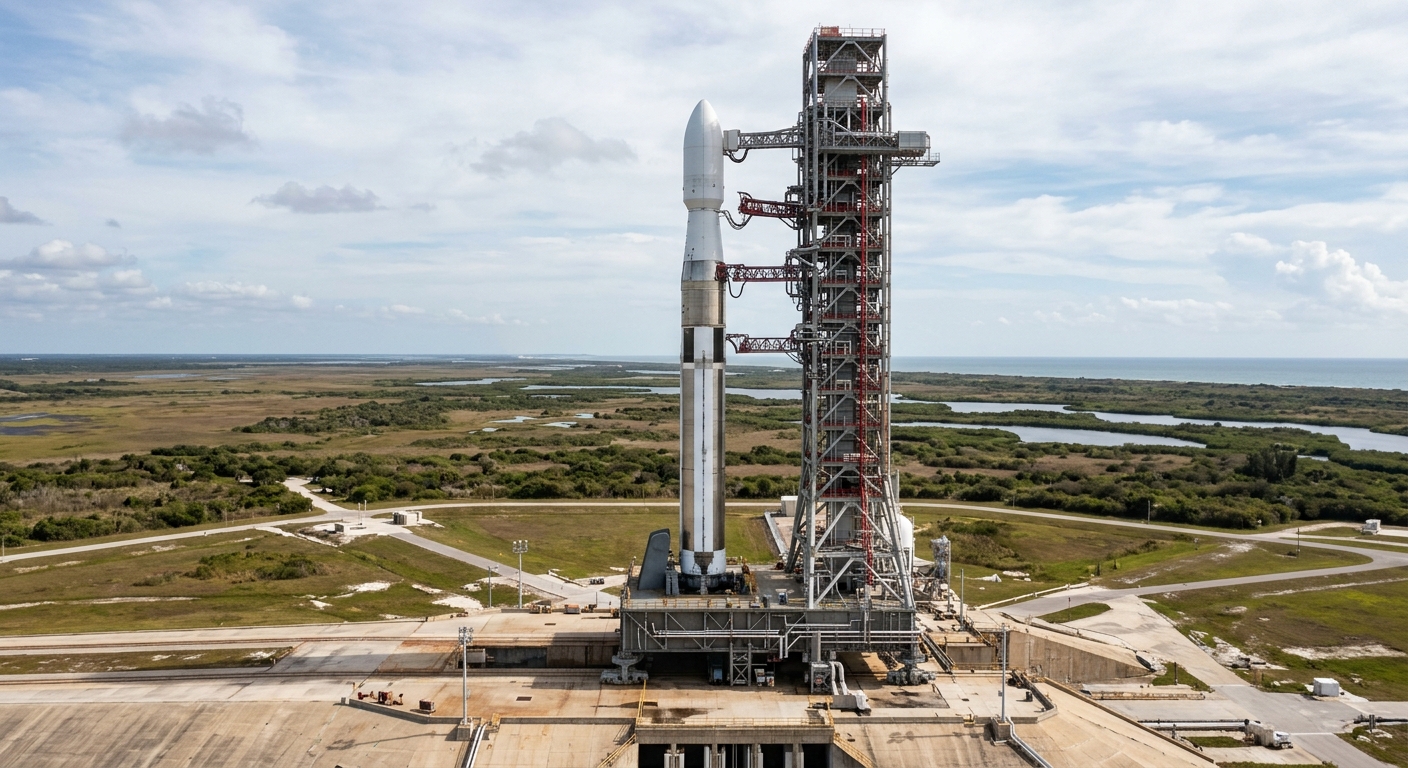
AI-generated illustration; not a photograph of the reported event.
- calendar_today November 15, 2026
Vulcan Rocket Suffers Malfunction During Sunday Launch
United Launch Alliance (ULA) experienced a significant setback on Sunday when its new heavy-lift Vulcan rocket malfunctioned during ascent, resulting in the failure to deliver 40 Amazon LEO internet satellites to orbit. The incident occurred roughly 10 minutes after liftoff from Space Launch Complex 41 at Cape Canaveral Space Force Station, affecting the launch schedules of both ULA and Amazon.
Anomaly Ends First Major Vulcan Mission
According to ULA's official statement issued shortly after the event, an anomaly was detected mid-flight, leading to the loss of the Amazon payload. “We will work closely with our customer and other appropriate organizations to find the cause, determine the appropriate corrective action, and return to flight as quickly as possible,” ULA affirmed.
Launch Details and Timeline
The Vulcan rocket, which took off at 12:40 p.m. ET, was powered by two methane-fueled BE-4 engines from Blue Origin and six strap-on boosters constructed by Northrop Grumman. The rocket was carrying 40 satellites as part of Amazon’s Leo internet constellation—a planned network to rival providers like Starlink.
This mission was the fifth Vulcan flight and the first since ULA and Northrop Grumman resolved prior technical issues involving the booster nozzles. The countdown itself faced complications, with previous attempts postponed due to unrelated technical and logistical challenges. On Sunday, a technical issue necessitated a final hold at the T-minus 20-second mark before the rocket eventually launched at the end of the designated window.
Failure Investigation Underway
While the root cause of the latest launch failure remains unknown, early indications suggest the anomaly occurred after the first stage burned longer than planned and during the Centaur upper stage’s engine burn. No additional technical specifics have been provided. ULA is coordinating a detailed investigation, promising full transparency to its customers, and enlisting assistance if necessary—an offer extended by NASA Administrator Jared Isaacman.
Implications for Amazon's LEO Constellation
Sunday’s unsuccessful launch was the first of 38 Vulcan flights Amazon has purchased to build out its constellation, which ultimately will require more than 3,300 satellites. To date, ULA has used Atlas 5 rockets for eight LEO launches. Amazon also has agreements with Blue Origin’s New Glenn, Europe’s Ariane 6, and SpaceX’s Falcon 9 for dozens of additional missions.
Amazon Leo, the team managing the constellation, acknowledged the risks of inaugural flights but remained optimistic about ULA’s capabilities to resolve issues and proceed with future launches.
Technical Setbacks and Industry Collaboration
This event marks the first outright failure of a ULA rocket since the organization’s formation in 2006 via a partnership between Boeing and Lockheed Martin. Both ULA and its partners, including Northrop Grumman for the boosters and Blue Origin for the BE-4 engines, are expected to play key roles in the ongoing investigation and eventual return to flight.
The BE-4 engines powering the Vulcan have received retrofits following a previous Blue Origin valve issue that caused a New Glenn rocket explosion in May. According to ULA CEO Mark Peller, improvements and retrofits were implemented ahead of the ill-fated Vulcan flight, and joint efforts are ongoing to secure reliable engine inventory for future missions.
Looking Ahead: Investigation and Schedule Impact
The Vulcan rocket's failure introduces further complications for ULA, which is awaiting resolution of the solid booster issue and approval from the U.S. Space Force for national security payload launches. For Amazon, progress on the Leo internet constellation now hinges on ULA’s investigation and the status of other launch partners.
Until the cause of the anomaly is identified and corrected, both organizations will face delays in executing their respective launch plans.
Source: cbsnews.com.