
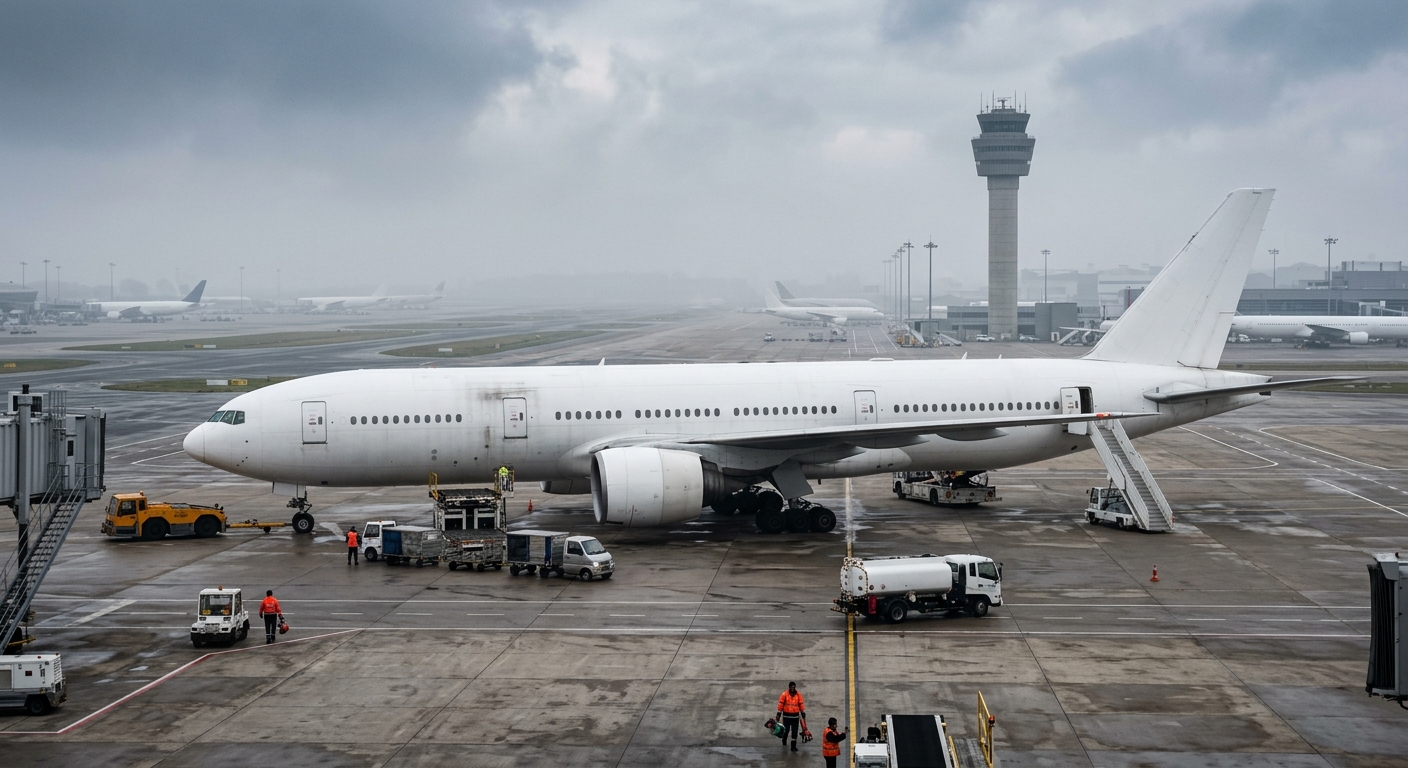
AI-generated illustration; not a photograph of the reported event.
- calendar_today October 9, 2026
Deadly Houthi Attacks Strike Riyadh Airport
The ongoing Iran war saw a dramatic escalation as three Saudi citizens were killed Thursday in an attack by Iran-backed Houthi rebels at Riyadh's King Khalid International Airport. This incident marks the deadliest assault within Saudi Arabia since a major military campaign was launched by Saudi and allied forces in Yemen last weekend to reclaim territory from the Houthis. The Houthi group has repeatedly claimed responsibility for attacks on Saudi airports throughout the week, including the airport in Riyadh, intensifying the middle east conflict.
Victims and Damage: Saudia Airlines Mourns Loss
Among those killed in the Thursday airport attack was Captain Hamoud bin Ali Al-Kalthami, an aircraft captain for Saudi national carrier Saudia Airlines. The airline honored Al-Kalthami’s professional service and extended condolences to his family and colleagues. The Saudi aviation authority reported several other casualties of "different nationalities," with injuries ranging from minor to serious. The airport assault included two strikes: one on airport facilities and another on an empty aircraft. This was the first confirmed attack on Saudia Airlines since the recent intensification against Houthis attacks in the region.
International Response: US and Pakistan Involvement
The U.S. Embassy in Saudi Arabia responded by issuing a new security alert, advising American citizens to exercise heightened vigilance if traveling through King Khalid International Airport due to the ongoing Houthi attacks. The embassy warned of possible flight cancellations, airspace closures, and significant travel disruptions. U.S. government employees are prohibited from traveling near the Yemeni border and now require special authorization to use Riyadh’s airport.
Pakistan's foreign ministry confirmed Friday that a substantial number of Pakistani forces remain deployed in Saudi Arabia for defensive purposes. Spokesman Sajjad Haider Khan stated that Pakistani military personnel would not cross Saudi borders for offensive operations against the Houthis but would act in defense of Saudi territory. Pakistan entered a defense pact with Saudi Arabia and Turkey in August, providing for mutual assistance in case of attack. Khan noted this deployment continues a longstanding military relationship between Pakistan and Saudi Arabia dating back to the 1980s and reaffirmed by a 2025 bilateral agreement.
Diplomatic Efforts: Iran-US Talks and Papal Involvement
On the diplomatic front, Iranian President Masoud Pezeshkian announced Thursday that Tehran had revised its proposals to initiate renewed peace talks with the United States, expressing a willingness to finalize these through mediators. However, he criticized Washington for allegedly undermining diplomacy, stating that each time talks are scheduled, the U.S. resumes attacks.
Additionally, Mohammad Hossein Mokhtari, Tehran’s ambassador to the Vatican, appealed to Pope Leo XIV to denounce U.S. sanctions and air restrictions on Iran. Mokhtari urged the pope to advocate for humanitarian air routes and press Washington on the broader human consequences of its sanctions and restrictions, which Tehran describes as "economic terrorism." Recent U.S. measures included new sanctions on 27 Iranian airlines and threats against global airports and companies servicing them.
Economic Impact: Oil Prices and US Political Factors
The middle east conflict has also affected global oil prices. Brent crude oil, the international benchmark, eased to $103 a barrel on Friday after U.S. President Trump publicly promised that the United States would not attack Iran before the upcoming midterm elections. Trump cited ongoing "productive conversations" with Iran, but provided no further details. He also reported that U.S.-escorted oil shipments through the Strait of Hormuz reached 22 million barrels in a single night—a rate comparable to prewar levels, though none of the oil is sourced from or delivered to Iran. Prior to Trump’s statement, Brent crude prices had surged to $105 a barrel before dropping back to $103.
USS Abraham Lincoln Returns Home as Conflict Persists
Amid these developments, the USS Abraham Lincoln and its crew of over 4,500 sailors returned to San Diego after spending more than 10 months in deployment, including months in support of the U.S. war against Iran in the Middle East. This return marked the end of 250 consecutive days at sea, though the broader conflict in the region continues to escalate.
Source: cbsnews.com.