
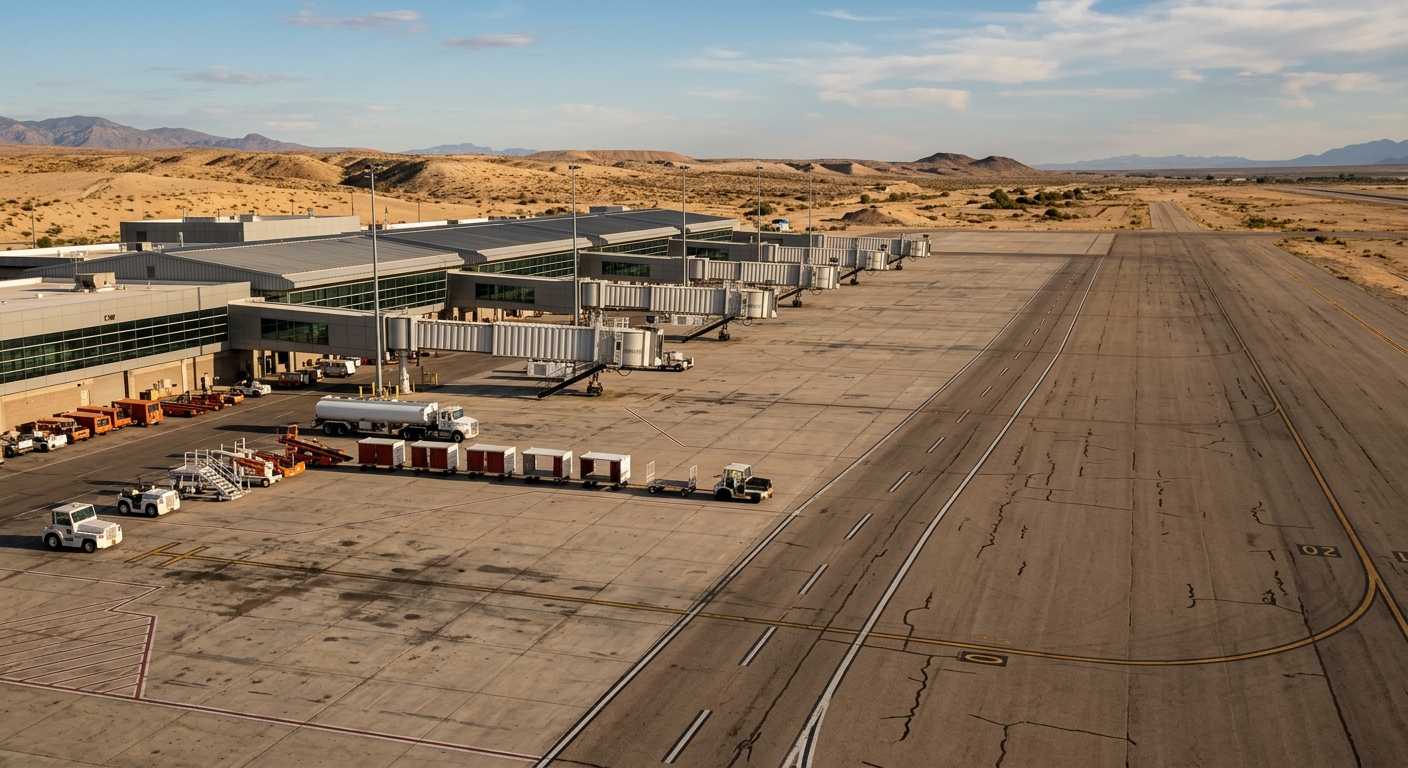
AI-generated illustration; not a photograph of the reported event.
- calendar_today October 12, 2026
Houthi Missile Strikes Leave Riyadh Airport Closed
King Khalid International Airport in Riyadh, Saudi Arabia, remains closed after a series of deadly missile strikes carried out by Iran-backed Houthi rebels from Yemen killed 20 people over the past week. The closure follows two attacks on the airport over the weekend, with Saudi authorities extending the shutdown to verify the safety of the airport’s facilities.
Civilian Casualties Mount in Ongoing Attacks
The deadliest single strike occurred on Saturday, resulting in 13 fatalities, including a U.S. citizen. CCTV footage released by Saudi authorities shows Muslim pilgrims waiting in a departure lounge moments before an explosion tore through the terminal, sending debris falling as flames erupted. Another strike on Sunday killed one additional civilian—a Pakistani national—and wounded 11 others. In total, at least 20 people have been killed in attacks at Saudi airports over the past week, with dozens more wounded.
Saudi Arabia Vows Response as Conflict Intensifies
Saudi Energy Minister Prince Abdulaziz bin Salman said at an energy conference in Riyadh that the kingdom has been tested by the lethal airport strikes and vowed an "equally serious" response. He emphasized that "energy security can't be taken for granted," highlighting the risks posed to global oil markets by the ongoing conflict.
The strikes come as Saudi Arabia pursues economic reforms to attract investment, and the attacks have underscored broader instability in the region. The Houthis, supported by Iran, have targeted not only airports but also vital energy infrastructure, such as the East-West Crude Oil Pipeline, temporarily disrupting Saudi oil exports.
Global Oil Markets and Energy Security Amid Crisis
The missile strikes and continued tensions have unsettled energy markets. The price of Brent crude oil rose over $105 per barrel, reaching a two-week high in the wake of the conflict. The region’s instability is being further compounded by competing U.S. and Iranian blockades in the Persian Gulf and Strait of Hormuz, threatening energy supply chains worldwide.
Prince Abdulaziz underlined Saudi Arabia’s continued commitment to its energy infrastructure and international partnerships despite the current security challenges, stating that "fear has no place in the Saudi dictionary." He credited Saudi Aramco's expertise for rapid recovery during disruptions but also noted the increased frequency and impact of attacks amid the U.S.-Iran conflict.
U.S. Embassy Warns Americans as Security Concerns Rise
Amid the saudi airport attacks, the U.S. embassy in Saudi Arabia urged American citizens to exercise “extreme caution” when using major airports in the country, following the deadly weekend strikes. Multiple airport terminals have been struck in recent days, further elevating concerns about the safety of civil aviation in the region.
President Trump stated that the U.S. "may" join Saudi efforts to target Houthi rebels, indicating ongoing discussions about potential military involvement in the escalating regional conflict. The U.S. military has also been active in the area, recently disabling a commercial vessel in the Gulf of Oman and targeting tankers believed to be transporting sanctioned Iranian oil.
Broader Middle East Conflict and Ongoing Yemen War
The houthis missile strikes are just one part of the wider yemen conflict between the Saudi-backed government and Iran-backed rebels. Fighting has intensified in recent days, especially around the strategic Yemeni city of Taiz, where over 60 people were killed within 24 hours. The Houthis continue to press their campaign, threatening to expand their control and deepen the humanitarian crisis.
The escalation of attacks, the riyadh airport closure, and rising iran saudi tensions highlight the increasing risks of instability not only within the kingdom but for global energy security and shipping routes throughout the Middle East. International dialogue and cooperation are being emphasized as essential to stabilize the situation and protect critical infrastructure.
Source: cbsnews.com.