
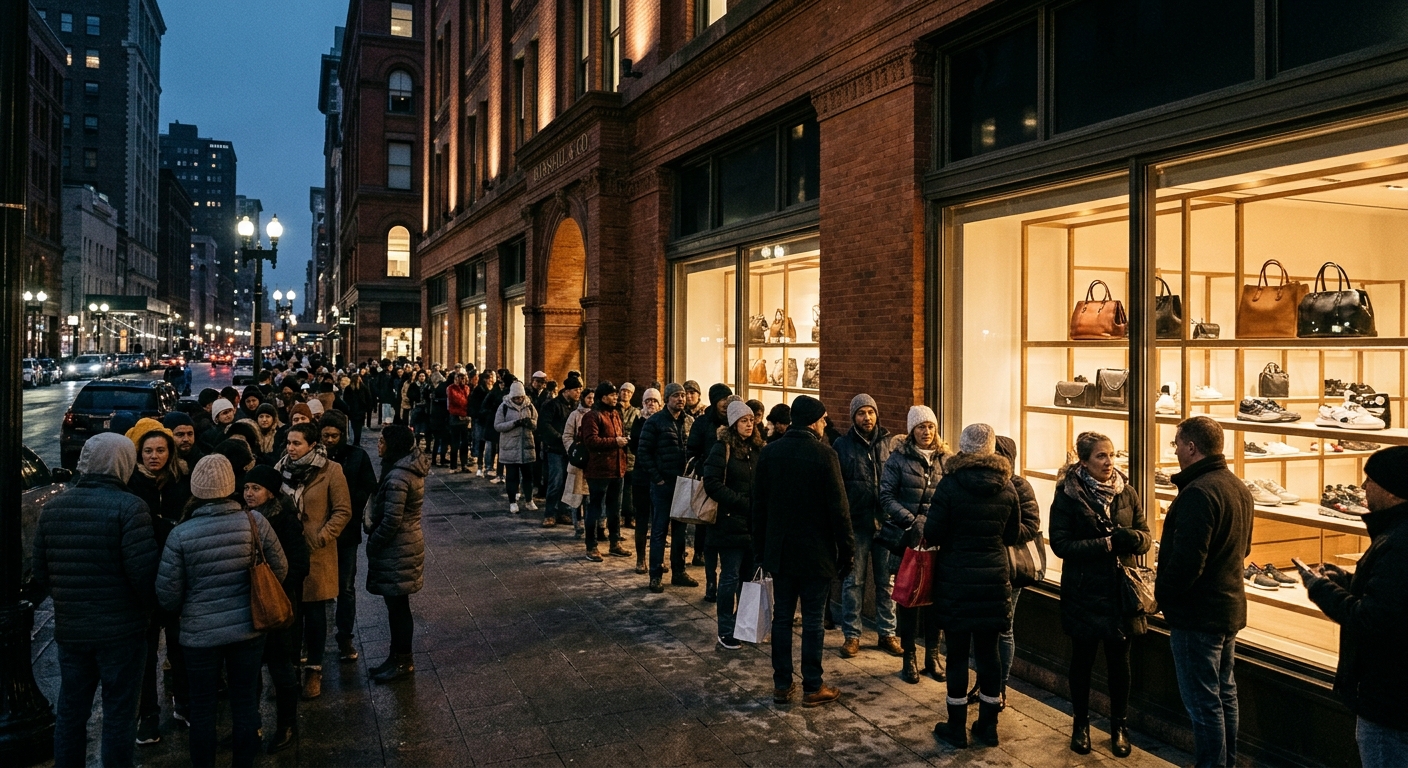
AI-generated illustration; not a photograph of the reported event.
- calendar_today November 27, 2026
Black Friday Draws Early Shoppers to Macy’s
As dawn approached in New York City, shoppers lined up outside Macy’s flagship Herald Square store for the annual Black Friday rush. Despite weeks of online deals and growing e-commerce competition, in-store shopping on Black Friday remains a favored tradition for many, according to data from Sensormatic Solutions. The event, often compared to the Super Bowl for the U.S. retail industry, once again generated significant foot traffic—even after online retailers had offered significant promotions in weeks leading up to the holiday.
Macy’s Welcomes Die-Hard Shoppers
This year, the parade of customers through Macy’s doors at 6 a.m. included Nita Lawrence and her two nieces, visiting from Miami. Although the store’s annual Thanksgiving Day Parade was postponed to Saturday due to high winds, the trio eagerly explored Black Friday bargains—such as handbags marked 25% to 40% off and sneakers at 20% to 50% discounts. Lawrence shared, “We do Black Friday every year, but this Macy’s is much bigger. This is special. Today, I am buying for me.”
Online Spending Hits New Highs
While stores continued to claim a significant share of holiday dollars, online shopping posted record figures. Adobe Digital Insights reported that U.S. consumers spent $7.1 billion online on Thanksgiving alone—a 10.4% increase over last year. Black Friday online sales were projected at a record $12.9 billion, up 9.2% from 2022, with electronics and gaming leading the surge.
Economic Conditions Shape Holiday Shopping
Shoppers’ behavior reflected broader economic realities marked by persistent inflation and fluctuating gas prices. Many retailers counted on year-end sales around Black Friday to gauge consumer financial health; this year, consumer confidence saw a rebound as gas prices declined. The National Retail Federation estimated about half of the predicted 4.1% holiday sales growth—expected to reach $1.01 trillion—would be due to higher prices, not just increased demand.
In-Store Narratives: Meeting Needs and Wants
Among Macy’s morning shoppers was retired schoolteacher Anna Butler from Atlanta, who purchased six pairs of jeans. Butler felt confident in her finances thanks to Social Security and retirement benefits, despite economic uncertainties. Meanwhile, Frank Cardino from Lindenhurst, New York, waited as his family shopped, remarking, “I'm the coat holder and the credit card.” Cardino and his family planned to return to Long Island and miss the rescheduled parade, expressing flexibility in their holiday spending.
Black Friday’s Evolving Role
The scope of Black Friday has shifted in recent years, with many shoppers using the occasion to buy everyday necessities—not just gifts. According to Salesforce, which tracked digital shopping, the biggest discounts during Black Friday week were expected in clothing, home goods, and personal care products. Online sales of cleaning products and everyday apparel surged dramatically in November, reflecting changing buying habits.
Discount Trends and Shopper Behavior
Retailers largely maintained price stability, opting for targeted promotions over broad increases. Early November discounts averaged 8% higher than the previous year and helped push average selling prices 1% below last year's levels, Salesforce reported. Still, analysts said the deepest markdowns would arrive on Thanksgiving and Black Friday. Adobe's data noted that Thanksgiving electronics discounts reached as much as 29%, with TV deals averaging 23% off on Black Friday.
Rise of AI and Digital Engagement
AI-enhanced shopping grew rapidly, with Adobe observing that AI-generated traffic to retail websites more than doubled from last year’s totals on Thanksgiving. This digital transformation further signals a hybrid future for holiday shopping, blending long-standing in-person traditions with expanding online experiences.
Source: abcnews.com.