
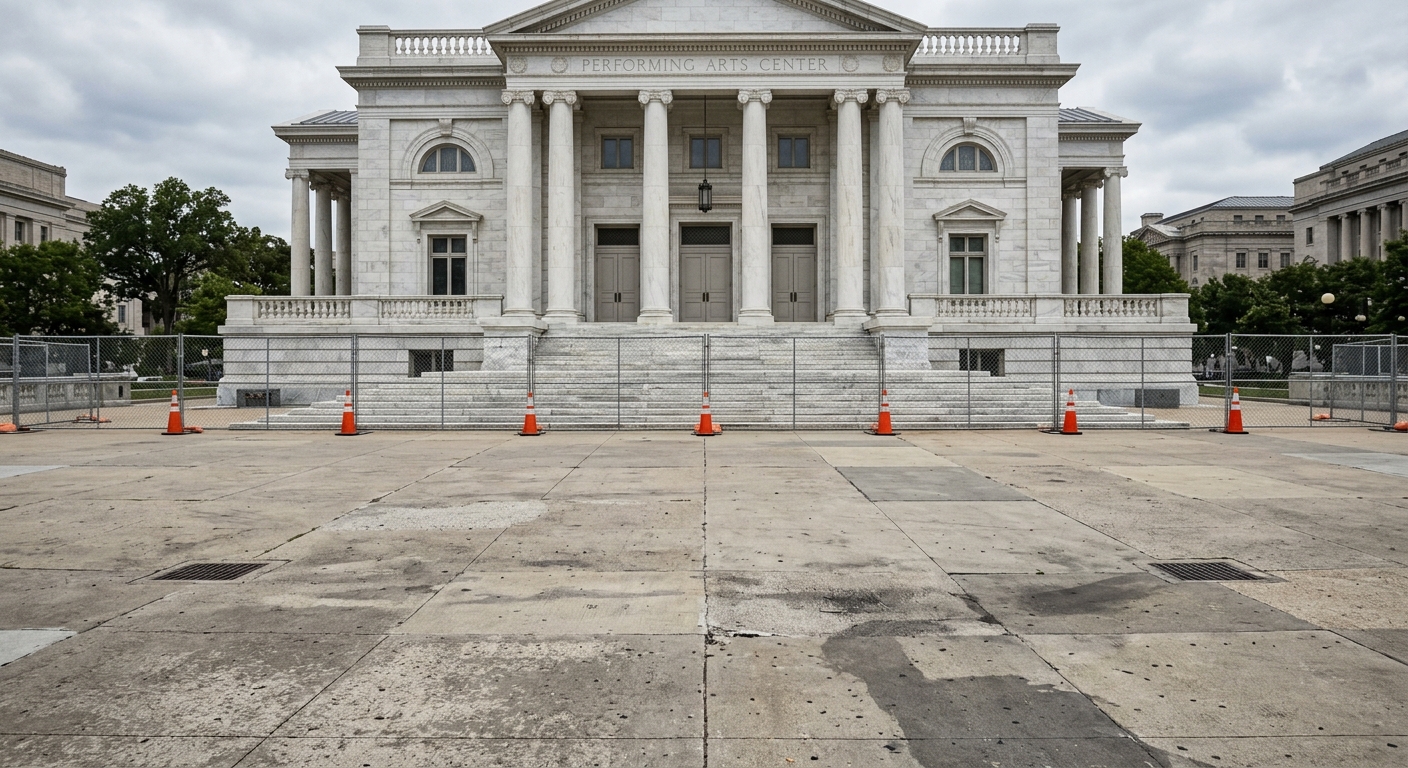
AI-generated illustration; not a photograph of the reported event.
- calendar_today October 10, 2026
Kennedy Center Selects New Artistic Director
The John F. Kennedy Center for the Performing Arts has announced the appointment of Rick Canny as its new artistic director. The decision comes during a period marked by staff concerns about Canny's previous consulting work, ongoing financial uncertainty, and the center's continued closure to the public.
Background on Rick Canny and the Appointment
Rick Canny, recognized for his talent management work with artists such as ZZ Top and former Mötley Crüe drummer Tommy Lee, was officially named artistic director in an email to senior staff last Thursday. The announcement came from Matt Floca, the center’s executive director and chief operating officer. Canny has served as a consultant for the Kennedy Center since shortly after former President Donald Trump became the institution's chairman in February 2025.
According to Floca, Canny will advise the leadership team on areas including artistic strategy, business practices, talent curation, ticketing and pricing, media opportunities, and programming sponsorships. He will continue his work as the creative lead for the Kennedy Center Honors and the Mark Twain Prize while serving as artistic director.
Concerns Over Fees and Staff Complaints
The appointment follows internal complaints regarding Canny’s business practices. An internal memo authored by the center’s then-senior director of music programming, Sammy Miller, raised concerns about the consulting fees and expenses Canny charged the center. According to the memo, in one month early in 2026, Canny billed the Kennedy Center $30,000 in consulting fees; in another month, his charges exceeded $28,000, with significant expenses including two first-class round-trip flights between Los Angeles and Washington, D.C.
Miller’s memo, sent to Floca and the Kennedy Center’s human resources department, also stated that previous attempts to address these concerns through general counsel and the finance office were unsuccessful. Miller wrote that “both offices appear to be protecting Mr. Canny.” NPR reached out to Miller for comment but received no reply. The Kennedy Center did not respond to NPR’s requests for comment on Canny’s appointment or staff concerns but confirmed the email announcing the appointment. Canny also did not respond to multiple requests for comment.
Questions About Experience and Leadership
Canny’s published professional background indicates limited experience with programming acts typically found at the Kennedy Center, such as orchestras, dance troupes, and marquee solo performers. The website for his consulting firm, Favor the Artist, provides no information about his client roster or history. Meanwhile, executive director Matt Floca, who holds a degree in construction management and previously served as the head of facilities, has no arts administration experience, unlike leaders at similar institutions.
Ongoing Closure and Legal Disputes
The Kennedy Center has remained closed to the public since September, although a small number of public and educational programs continue. The entire closure is currently being challenged in federal court. Last month, Trump and the majority of the board, whom he appointed, filed to shutter the institution for two years for renovations. The center’s previous head of programming came and went within two weeks in January 2026, highlighting instability within the institution.
The Kennedy Center has publicly claimed in recent statements and court filings to be on the verge of bankruptcy. Trump recently stated that the center had lost "hundreds of millions" of dollars, though no evidence has been provided. Trump also threatened to tear down the building if his name is not displayed prominently.
Outlook for the Kennedy Center
As the legal and financial uncertainty continues, the Kennedy Center’s decisions regarding leadership and programming remain closely watched by staff, the arts administration community, and the public. The institution faces challenges both internally, from staff concerns over consulting fees and business practices, and externally, from ongoing legal battles and threats to its future as a leading performing arts venue.
Source: npr.org.