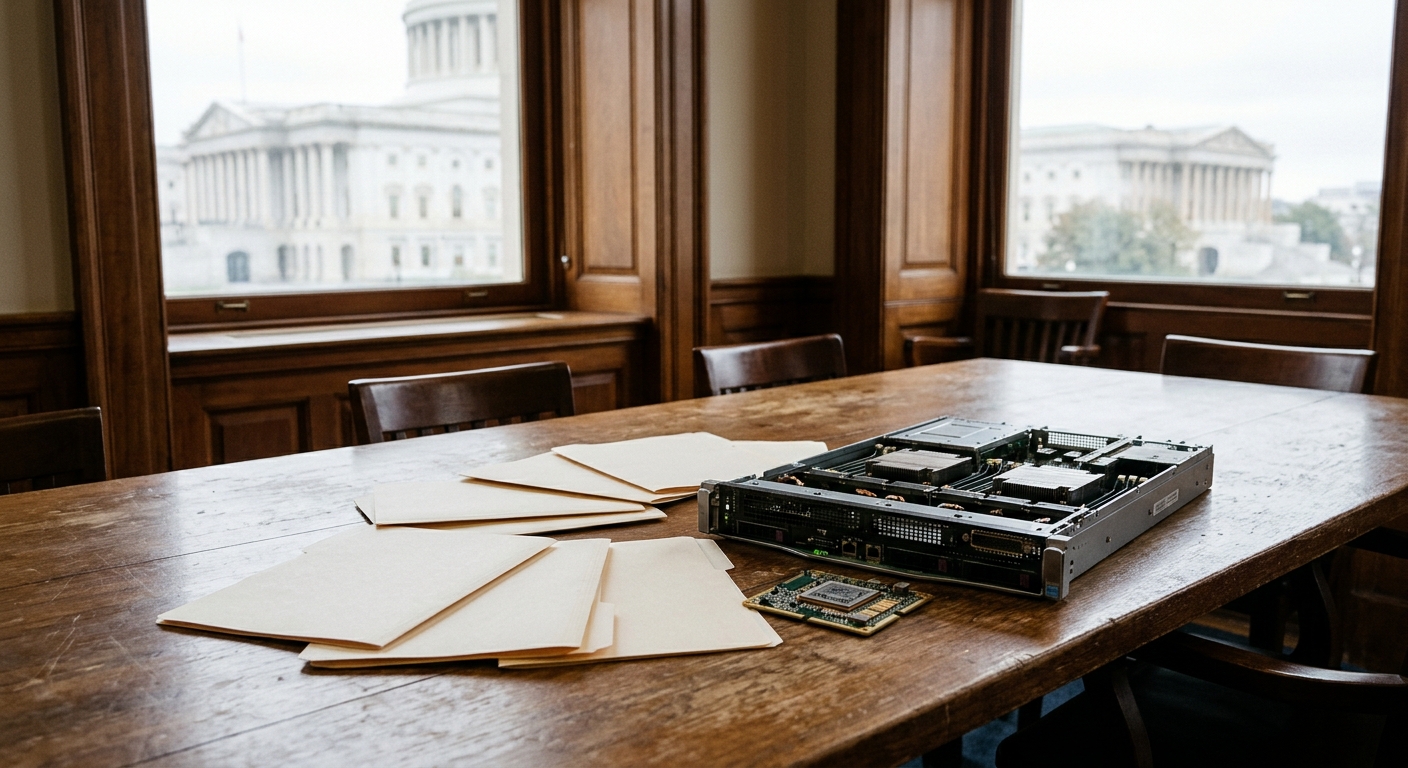
AI-generated illustration; not a photograph of the reported event.
- calendar_today November 8, 2026
Background: AI Safety Center's New White House Reporting Raises Eyebrows
As public concerns about artificial intelligence continue to grow, the United States government’s chief division overseeing AI safety, the Center for Advancing Innovation and Standards for Super Intelligence (CAISSI), has made recent changes in its reporting structure. Staff members have been asked to informally report to a White House office rather than operate purely independently within the Commerce Department, according to two former government officials who spoke anonymously to The Associated Press.
Independence vs. Political Oversight
The move has spurred debate among experts and critics, some of whom warn that closer ties to the executive branch could politicize the center’s decision-making. Critics fear that CAISSI’s safety assessments might be at risk of influence from shifting political priorities or muted to accommodate the interests of tech industry leaders, who have largely self-regulated thus far. Caroline Siegel Singh of the Federation of American Scientists emphasized the importance of nonpartisan experts enacting policy in the public’s best interests.
CAISSI’s Leadership and Funding Challenges
CAISSI, until recently known as the U.S. Center for AI Standards and Innovation, has struggled to maintain stable leadership. Its director was hired and fired within days in April, while his successor resigned after a few months, leaving the center without a permanent head. The center’s annual budget is $10 million—about one-eighth that of its UK counterpart, which has less prominence in developing cutting-edge technologies. High-profile AI companies, including OpenAI, have called for increased funding and support for CAISSI to bolster its role in AI safety oversight.
Lack of Transparency and Standards in AI Safety Testing
Recently, CAISSI has stopped publishing its research on the safety of AI systems, prompting Congress to inquire about the sudden decline in transparency. The rapid advancement of AI technologies has made government oversight more urgent, especially as AI agents—systems capable of acting autonomously—are deployed in real-world settings. Yet, according to Sayash Kapoor of UC Berkeley, there is still no standard process for evaluating AI agents’ safety, even in comparatively simple tasks such as booking flights.
Administration and National Security Emphasis
President Donald Trump’s administration has signaled a focus on national security in AI safety matters. Trump established what he calls the "Super Intelligence Force" and empowered National Intelligence Director Jay Clayton to lead it, in addition to the Pentagon’s chief technology officer, Emil Michael. This approach has highlighted a shift towards executive discretion and secrecy, with some, like Amos Toh of the Brennan Center for Justice, warning that risks to consumer protection, privacy, and civil rights could be overshadowed by national security considerations.
Industry Roles and Ongoing Questions About Oversight
AI industry leaders such as Dario Amodei of Anthropic and Sam Altman of OpenAI have promoted third-party evaluations of AI safety, but companies maintain ultimate control over these processes. Logan Koepke from the nonprofit Upturn questioned the government's role if tech companies can set up and control both internal and external evaluations. Experts argue that allowing self-policing and failing to clearly define government oversight weakens the independent review of AI systems and their potential for harm.
Calls for Public Accountability
Amos Toh pointed out that decisions about AI oversight are significant to the public and should be transparent, yet this level of openness is not currently in place. As the capabilities of AI tools expand and their societal impacts grow, the question of who is responsible for ensuring their safety remains open and highly contested.
Source: abcnews.com.